
Stop treating your grains like a low-priority side dish and start viewing them as the structural foundation of your culinary architecture. We are entering the realm of Proso millet; a resilient, alkaline-heavy powerhouse that demands more than a cursory boil. Most home cooks approach this ancient seed with the grace of a sledgehammer, resulting in a gummy, uninspired mass that lacks structural integrity. We are here to change that narrative through the precision of automated thermal regulation. By utilizing the specific logic of Rice Cooker Millet, we remove the volatility of a fluctuating gas flame and replace it with the consistent, sensor-driven accuracy of a micro-computer. Imagine a grain that carries the nutty profile of toasted corn with the delicate fluff of a cloud. This is not just sustenance; it is a high-performance carbohydrate matrix. We are looking for individual grain separation, a vibrant golden hue, and a texture that offers a slight resistance before yielding to a creamy center. Let us calibrate your kitchen for peak efficiency.
THE DATA MATRIX
| Metric | Specification |
|---|---|
| Prep Time | 5 Minutes |
| Execution Time | 25 Minutes |
| Yield | 4 Servings |
| Complexity (1-10) | 2 |
| Estimated Cost per Serving | $0.45 |
THE GATHERS
Ingredient Protocol:
- 200g / 1 cup Proso Millet (Hulled)
- 475ml / 2 cups Filtered Water or Bone Broth
- 15g / 1 tbsp Grass-fed Butter or Ghee
- 5g / 1 tsp Sea Salt
- 1 Sprig Fresh Thyme (Optional for infusion)
Section A: Ingredient Quality Audit:
The primary failure point in Rice Cooker Millet is the use of oxidized or "stale" seeds. Millet contains a high percentage of natural oils that can turn rancid if stored in clear plastic under fluorescent lights. If your raw millet smells like old cardboard or paint, the volatile compounds have shifted; no amount of seasoning will save it. To fix this, always source "Birdseed" grade millet only if it is certified for human consumption, though high-quality organic Proso is preferred. Another common error is using "hard" tap water. High mineral content can interfere with the hydration of the grain's starch granules, leading to a gritty mouthfeel. Use filtered water to ensure the alkalinity of the seed is balanced rather than neutralized by chlorine or heavy calcium deposits.
THE MASTERCLASS
1. The Mechanical Rinse
Place your millet in a fine-mesh strainer and agitate it under cold running water for at least sixty seconds. Use your fingers to aerate the grains, ensuring that the dusty saponin coating is completely removed. This coating is responsible for the bitter aftertaste often associated with poorly prepared millet.
Pro Tip: Use a digital scale to measure your dry weight before rinsing. Water retention during the rinse can throw off your ratios if you measure by volume after the grain is wet. Precision in the initial mass ensures a consistent final viscosity.
2. The Maillard Pre-Toast
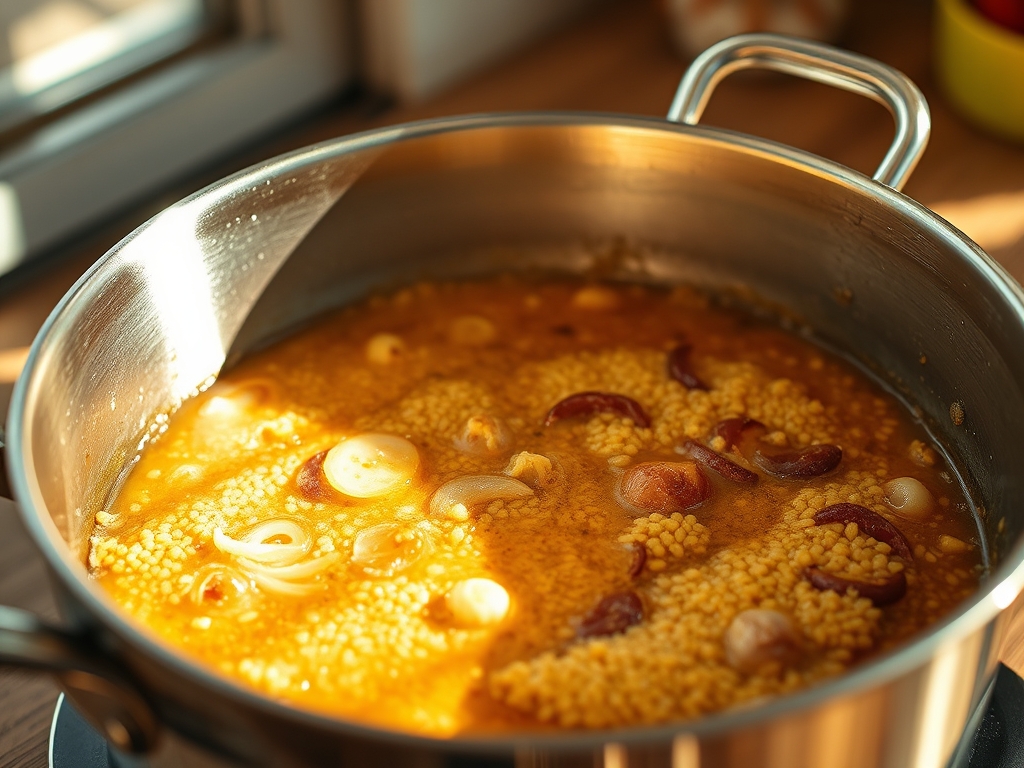
Before adding liquid, toggle your rice cooker to the "Quick Cook" or "Sauté" setting. Add the butter and the dry, rinsed millet. Stir constantly for three minutes until the grains emit a piquant, popcorn-like aroma and turn one shade darker.
Pro Tip: Use a silicone spatula or bench scraper to ensure no grains stick to the bottom heating element. This dry-heat application initiates the Maillard reaction, creating complex flavor compounds that boiling alone cannot achieve.
3. Thermal Integration
Pour in your filtered water or broth. Add the salt and thyme. Close the lid and set the device to the "Brown Rice" or "Standard Grain" cycle. The automated sensors will detect the steam pressure and internal temperature to determine the exact moment the moisture has been absorbed into the grain's core.
Pro Tip: If using a high-end induction rice cooker, the machine will infuse heat more evenly through the vessel walls than a traditional fuzzy-logic cooker. This prevents bottom-scorching and ensures a uniform texture from top to bottom.
4. The Steam-Lock Phase
Once the timer signals completion, do not open the lid. Allow the millet to rest on the "Keep Warm" setting for exactly ten minutes. This allows the residual steam to redistribute, ensuring the top layer of grains is as moist as the bottom.
Pro Tip: This is the most overlooked step in grain physics. Opening the lid too early causes a rapid pressure drop, which can lead to "shattering" of the grain exterior while the interior remains undercooked.
5. The Final Aeration
Open the lid and use a fork or a plastic rice paddle to gently fluff the grains. Do not stir vigorously; you want to lift and separate to allow excess steam to escape without crushing the delicate hulls.
Pro Tip: A saucier-style flick of the wrist can help if you transfer the millet to a bowl. This introduces air into the mass, preventing the grains from clumping as they cool and the starches begin to set.
Section B: Prep & Timing Fault-Lines:
Timing errors usually occur during the "Keep Warm" phase. If left for over thirty minutes, the bottom layer will begin to render its remaining moisture, leading to a crusty "socarrat" effect. While some enjoy this, it technically violates the fluffiness protocol of a standard audit. If your cooker runs hot, reduce the water by 25ml in future batches to compensate for the aggressive evaporation. If the millet is crunchy after the cycle, add 30ml of boiling water and initiate a 5-minute steam cycle manually.
THE VISUAL SPECTRUM
Section C: Thermal & Visual Troubleshooting:
Look closely at the reference image. The Rice Cooker Millet should exhibit "defined geometry." Each grain should be visible as a distinct sphere rather than a mashed paste. If your result looks dull or grey, you skipped the pre-toasting phase or used old water. If the color is uneven, it indicates poor heat distribution; ensure your cooker's bowl is properly seated on the heating element. If the millet appears "wet" or shiny, the starch has over-gelatinized due to excess water. The ideal visual cue is a matte, golden finish with "steam chimneys" (small holes) visible on the surface before fluffing.
THE DEEP DIVE
Macro Nutrition Profile:
Millet is a nutritional powerhouse. A single serving provides approximately 6g of protein and 2g of fiber. It is exceptionally high in magnesium, which aids in nerve function, and phosphorus, which supports bone health. Its alkaline nature makes it less inflammatory than wheat or corn for many digestive systems.
Dietary Swaps:
- Vegan: Replace butter with coconut oil or avocado oil. The coconut oil adds a subtle sweetness that complements the nuttiness of the Proso.
- Keto: While millet is a grain, its high fiber content means a smaller portion (50g cooked) can sometimes fit into a targeted keto approach, though it is generally avoided in strict ketosis.
- GF: Naturally gluten-free. Ensure your source is certified to avoid cross-contamination.
Meal Prep & Reheating Science:
To maintain the molecular structure during reheating, avoid the microwave if possible. The microwave agitates water molecules violently, often resulting in "rubberized" grains. Instead, place the millet in a pan with a tablespoon of water, cover, and heat on low. This re-steams the grain, restoring its original fluffiness without breaking the starch bonds.
THE KITCHEN TABLE
Why is my millet always mushy?
You likely over-hydrated the grain or skipped the rinse. Excess starch on the surface turns into a "glue" when heated. Stick to the 1:2 ratio and always rinse until the water runs clear.
Can I use the "White Rice" setting?
Yes, but the "Brown Rice" setting is superior. It includes a longer soaking period and a gentler temperature curve, which allows the tough outer hull of the millet to soften without the interior disintegrating.
Does toasting really matter?
Absolutely. Toasting changes the flavor profile from "bland cereal" to "toasted walnut." It also creates a hydrophobic barrier of fat around each grain, which prevents them from sticking together during the steaming process.
My millet smells like grass. Is that normal?
A slight earthy aroma is standard for Proso millet. However, if it is overpowering, it means the grain wasn't cleaned properly. A thorough rinse in warm water can help strip away those excess organic compounds.