Forget the oven. If you are still baking your custard-based desserts in a dry, temperamental cavern of fluctuating heat, you are operating on legacy hardware that is prone to failure. We are moving into the realm of the saturated steam environment. The Instant Pot Cheesecake is not just a trend; it is a superior engineering solution for the delicate protein lattice of dairy and eggs. In a traditional oven, the edges of your cake are subjected to brutal, direct heat while the center remains a viscous slurry. This leads to the dreaded radial crack. By utilizing a high-pressure steam chamber, we create a thermal blanket that maintains a constant 210 degrees Fahrenheit. The result is a texture so dense and creamy it defies the laws of standard home baking. We are talking about a molecularly perfect suspension of fat and protein. It is time to audit your kitchen workflow and upgrade your dessert output to professional specifications. Prepare for a high-performance dairy deployment.
THE DATA MATRIX
| Metric | Specification |
|---|---|
| Prep Time | 25 Minutes |
| Execution Time | 35 Minutes Active / 4 Hours Cooling |
| Yield | 1 (7-inch) High-Density Cake |
| Complexity (1-10) | 4 |
| Estimated Cost per Serving | $1.45 USD |
THE GATHERS
Ingredient Protocol:
- Crust Base: 150g / 1.5 cups Graham cracker crumbs
- Binding Agent: 56g / 4 tbsp Unsalted butter, melted
- Primary Lipid: 450g / 16 oz Full-fat cream cheese, room temperature
- Sweetening Agent: 150g / 0.75 cup Granulated sugar
- Protein Binder: 2 Large eggs (approx. 100ml total)
- Acidic Stabilizer: 120ml / 0.5 cup Sour cream
- Aromatic Infusion: 5ml / 1 tsp Pure vanilla extract
- Structural Salt: 1g / 0.25 tsp Fine sea salt
Section A: Ingredient Quality Audit:
If your cream cheese is cold, the emulsion will fail. Cold lipids do not aerate; they clump. If you attempt to blend cold cheese, you will introduce massive air pockets that expand under pressure and cause the cake to collapse. Technical Fix: Submerge sealed foil blocks of cream cheese in 100 degree Fahrenheit water for ten minutes to reach the optimal pliable state.
Sub-par eggs with weak protein structures can lead to a watery "weeping" effect. Ensure your eggs are Grade A Large. If the batter appears too viscous or thick, do not add water. Instead, whisk the sour cream separately to loosen its structure before integrating it into the primary mass. This ensures a homogenous mixture without over-working the gluten-free protein chains.
THE MASTERCLASS
1. Foundation Engineering
Combine your cracker crumbs and melted butter. Use a bench scraper to ensure every crumb is coated in lipid. Press this mixture into a 7-inch springform pan.
Pro Tip: Use a flat-bottomed measuring cup to compress the crust. A high-density crust prevents the cheesecake filling from migrating into the base, which would otherwise result in a soggy, unappealing interface.
2. Lipid Homogenization
In a stand mixer or using a hand mixer, beat the cream cheese and sugar until the mixture is completely smooth. You are looking for a glossy sheen.
Pro Tip: Use a digital scale to measure your sugar. Volumetric measurements are imprecise and can alter the osmotic pressure of the batter, affecting how the proteins coagulate during the steam cycle.
3. Protein Integration
Add the eggs one at a time on the lowest speed possible. Do not over-mix. You want to incorporate the eggs just until the yellow streaks vanish.
Pro Tip: Over-mixing at this stage introduces excess oxygen. In a pressurized environment, that oxygen will expand and cause the cake to rise like a souffle, only to crater during the cooling phase.
4. The Final Emulsion
Fold in the sour cream, vanilla, and salt. Use a silicone spatula to scrape the bottom of the bowl to ensure no dense pockets of unmixed cheese remain.
Pro Tip: Professional bakers use a saucier technique of gentle folding to maintain the density of the batter. This ensures a piquant flavor profile where the vanilla and salt are evenly distributed.
5. Steam Chamber Deployment
Pour 250ml of water into the Instant Pot liner. Place the pan on a trivet. Secure the lid and set to High Pressure for 35 minutes.
Pro Tip: Allow for a 10-minute natural pressure release. A sudden drop in pressure (Quick Release) will cause the internal steam within the cake to expand violently, shattering the delicate top surface.
Section B: Prep & Timing Fault-Lines:
The most common human error is the "Temperature Gap." If you move the cake directly from the hot Instant Pot to a cold refrigerator, the thermal shock will cause the fat to seize and the crust to pull away from the filling. You must allow the cake to reach ambient room temperature on a wire rack before it enters the cold storage phase. Furthermore, failing to dry the "condensation rain" off the foil cover before removing it can lead to surface pitting. Always tilt the lid away from the cake when opening the vessel.
THE VISUAL SPECTRUM
Section C: Thermal & Visual Troubleshooting:
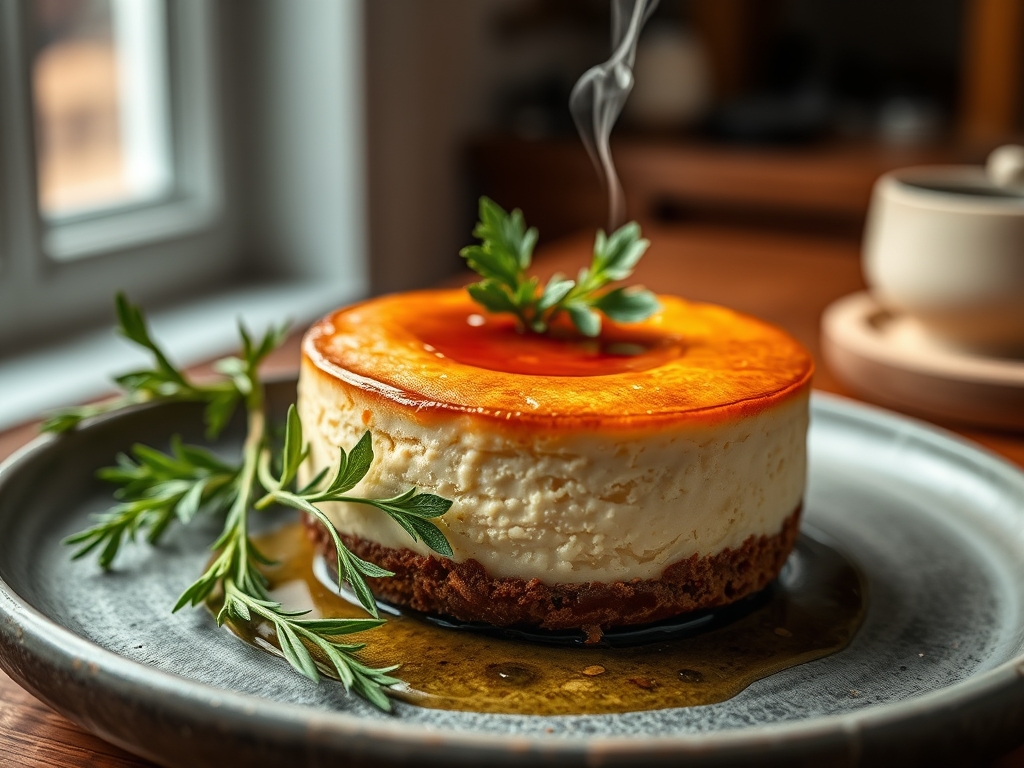
Referencing the Masterclass photo, notice the uniform, pale ivory surface. This indicates a perfect steam-saturated environment. If your cake has a "pock-marked" surface, you likely skipped the "tap" step. After pouring the batter, tap the pan firmly on the counter five times to force air bubbles to the surface.
If you see a dark ring around the edge, your pressure cooker ran too hot or you lacked sufficient water in the liner, causing a dry-heat "bake" rather than a steam "set." If the center appears to jiggle like liquid rather than a firm jelly, it is under-cooked. However, remember that the residual heat will continue to render the fats and set the proteins as it cools. The "Jiggle Test" should reveal a slight movement in the center two inches only.
THE DEEP DIVE
Macro Nutrition Profile:
A standard slice (1/8th of the cake) contains approximately 340 calories, 24g of fat, 28g of carbohydrates, and 6g of protein. The high lipid content provides a significant satiety signal, making this a dense but satisfying metabolic load.
Dietary Swaps:
- Vegan: Swap cream cheese for a cashew-based lactic acid fermented spread and use an egg-replacer or silken tofu.
- Keto: Replace graham crackers with almond flour and butter; substitute granulated sugar with erythritol or monk fruit.
- GF: Use certified gluten-free graham crackers or a nut-based crust.
Meal Prep & Reheating Science:
Cheesecake is a rare specimen that improves with age. Over 24 to 48 hours, the moisture migrates through the crust and the aromatic compounds in the vanilla infuse deeper into the dairy fat. Do not reheat this dish. Heat will break the emulsion and cause the butter to leak. Serve at 45 degrees Fahrenheit for the best structural integrity.
THE KITCHEN TABLE
Why did my cheesecake crack despite the steam?
Cracks usually indicate over-beating the eggs or a rapid temperature shift. Ensure eggs are added last on low speed and allow a full natural pressure release to stabilize the internal physics of the cake.
Can I use a larger pan?
A 7-inch pan is the standard for a 6-quart Instant Pot. A 6-inch pan works but requires increasing the cook time by 5 minutes due to the increased vertical depth of the batter.
My crust is soggy. What happened?
Water likely leaked into the pan. Ensure you wrap the bottom and sides of your springform pan in a double layer of heavy-duty aluminum foil to create a watertight seal against the steam.
How do I get a clean slice?
Heat a thin knife under hot water, wipe it dry, and make one clean downward stroke. Wipe the blade clean and re-heat between every single cut to maintain the aesthetic integrity of the dairy lattice.