The steam rises in a thick, fragrant cloud as the lid slides back; it is a sensory siren song that masks a hidden thermal battlefield. In the high stakes world of large scale entertaining, Slow Cooker Buffet Safety is not merely a suggestion; it is the structural integrity of your reputation. We are moving beyond the amateur realm of "set it and forget it." To host a successful event, you must operate like a culinary infrastructure auditor. You are managing a delicate ecosystem where protein fibers must render into succulent perfection without crossing the threshold into a bacterial playground. The goal is a viscous, rich sauce and fork-tender meat that maintains a consistent internal temperature above the danger zone for hours on end. This audit covers the technical precision required to execute a massive batch of Red Wine Braised Short Ribs. We are looking for deep mahogany hues, a piquant aromatic profile, and a thermal map that guarantees every guest leaves satisfied rather than compromised. Let us calibrate the sensors.
THE DATA MATRIX
| Metric | Specification |
|---|---|
| Prep Time | 45 Minutes |
| Execution Time | 8 Hours |
| Yield | 12 Servings |
| Complexity (1-10) | 4 |
| Estimated Cost per Serving | $7.50 |
THE GATHERS
Ingredient Protocol:
- 2.7 kg / 6 lbs Beef Short Ribs (bone-in)
- 45 ml / 3 tbsp Grapeseed oil
- 750 ml / 1 bottle Dry Red Wine (Cabernet or Merlot)
- 500 ml / 2 cups Beef Bone Broth
- 150 g / 5 oz Tomato paste
- 400 g / 14 oz Mirepoix (Carrots, Celery, Onion)
- 6 cloves Garlic, smashed
- 4 sprigs Fresh Thyme
- 10 g / 2 tsp Kosher Salt
- 5 g / 1 tsp Black Peppercorns, cracked
Section A: Ingredient Quality Audit:
If your beef appears grey or lacks marbling, the final result will be dry and astringent. High-quality short ribs should exhibit significant intramuscular fat; this is what will render to create that silky mouthfeel. If your wine is too acidic, it will dominate the flavor profile. Technical fix: Balance the acidity with a small pinch of baking soda or a teaspoon of brown sugar to mellow the harsh tannins during the long simmer. If your aromatics are wilted, they have lost their volatile oils. Infuse them in the hot oil for an extra three minutes to extract every remaining molecule of flavor before adding liquids.
THE MASTERCLASS
1. The Maillard Initiation
Pat the ribs bone-dry with paper towels. Heat a heavy-bottomed saucier or cast iron skillet over high heat until the oil shimmers. Sear the meat in batches, ensuring a deep brown crust forms on all sides. Do not crowd the pan, as this causes the meat to steam rather than sear.
Pro Tip: This browning is the Maillard reaction, creating complex flavor compounds that a slow cooker cannot replicate. Use a digital scale to ensure even portions, which guarantees consistent cooking times across the entire batch.
2. Deglaze and Extract
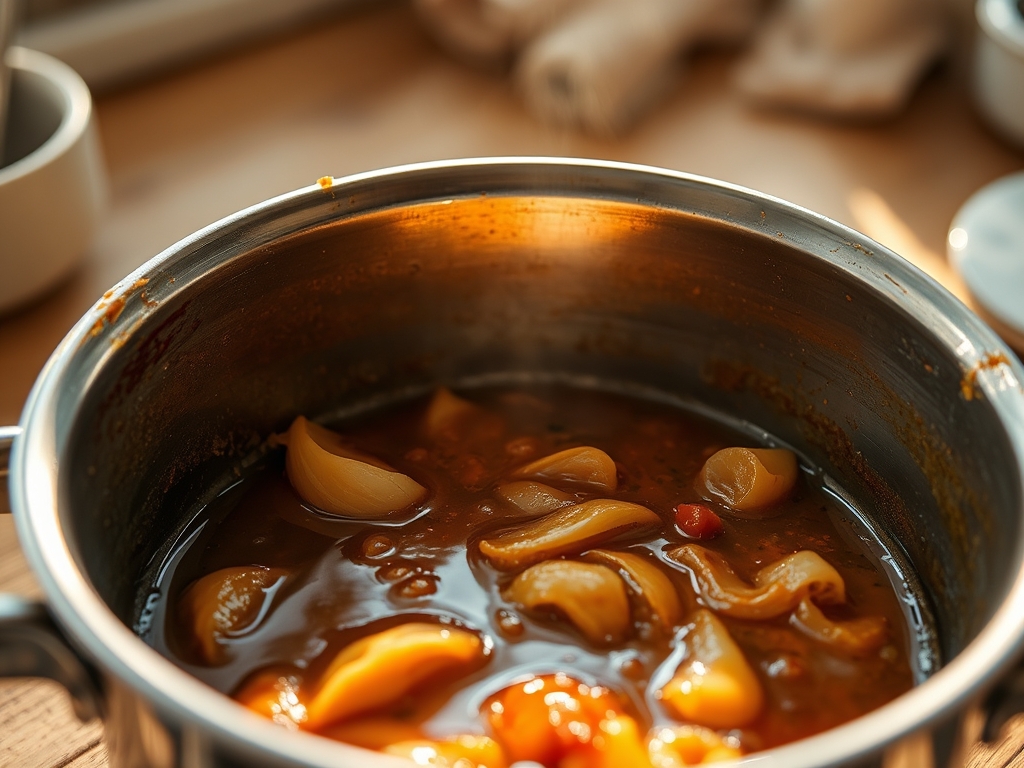
Remove the meat and discard excess fat, leaving about two tablespoons. Add the mirepoix and sauté until softened. Pour in the red wine to deglaze the pan, using a bench scraper or wooden spoon to lift the fond (the browned bits) from the bottom.
Pro Tip: The fond contains concentrated umami. By lifting these particles into the liquid, you ensure the sauce has a robust, savory backbone. Reducing the wine by half before adding it to the slow cooker removes the harsh alcohol bite.
3. Thermal Loading
Transfer the meat and the deglazed liquid into the slow cooker. Add the bone broth, tomato paste, and aromatics. Ensure the liquid covers at least two-thirds of the meat. Set the device to "Low" for a steady, controlled heat climb.
Pro Tip: Slow Cooker Buffet Safety relies on the "two-hour rule." The internal temperature of the food must reach 60 degrees Celsius (140 degrees Fahrenheit) within two hours to prevent pathogen growth. Use a calibrated probe thermometer to audit this transition.
4. The Viscosity Check
Once the meat is fork-tender, remove the ribs and strain the liquid into a clean pot. Simmer the liquid on the stovetop to reduce and thicken it into a viscous glaze. Skim any excess fat from the surface using a wide spoon or a fat separator.
Pro Tip: Reducing the sauce on the stove allows you to control the final texture. A professional glaze should coat the back of a spoon (nappe consistency). This ensures the sauce clings to the meat on the buffet line rather than pooling at the bottom of the dish.
Section B: Prep & Timing Fault-Lines:
The most common failure in Slow Cooker Buffet Safety is the "Warm" setting trap. Many consumer units do not hold a high enough temperature to keep food safe over a four-hour event. Audit your equipment: if the temperature dips below 60 degrees Celsius, you are in the danger zone. Another fault-line is the "Cold Start." Never put frozen meat directly into a slow cooker; the thermal lag is too great, allowing bacteria to multiply before the unit reaches a kill-temperature. Always thaw proteins completely in a refrigerated environment before beginning the sear.
THE VISUAL SPECTRUM
Section C: Thermal & Visual Troubleshooting:
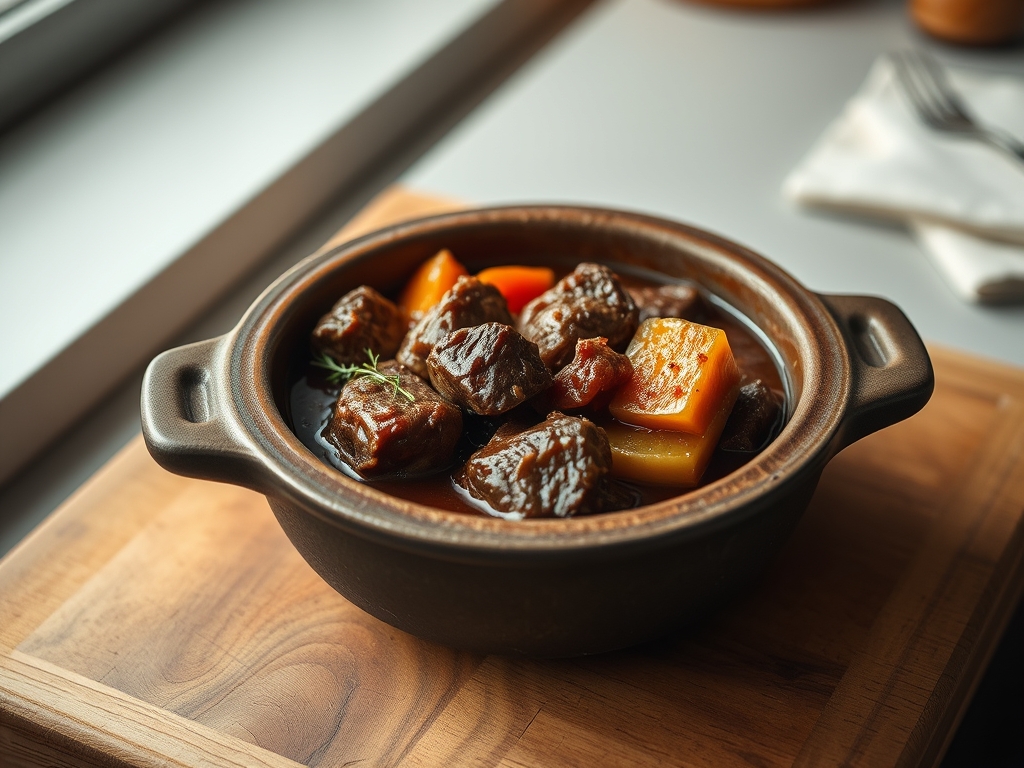
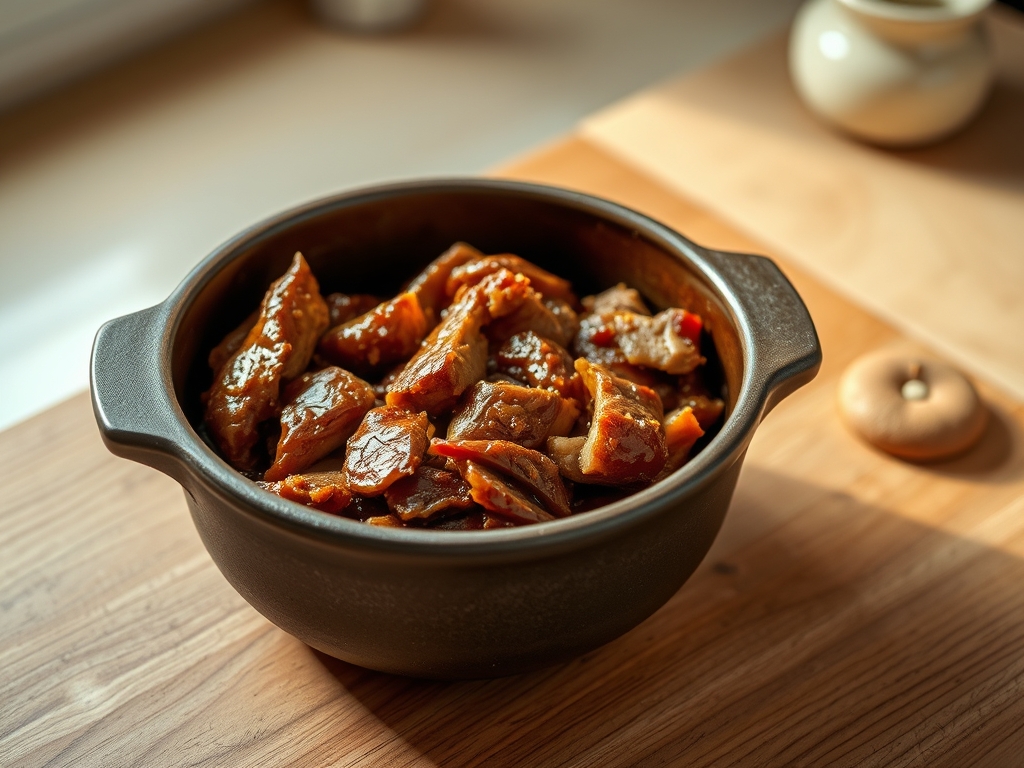
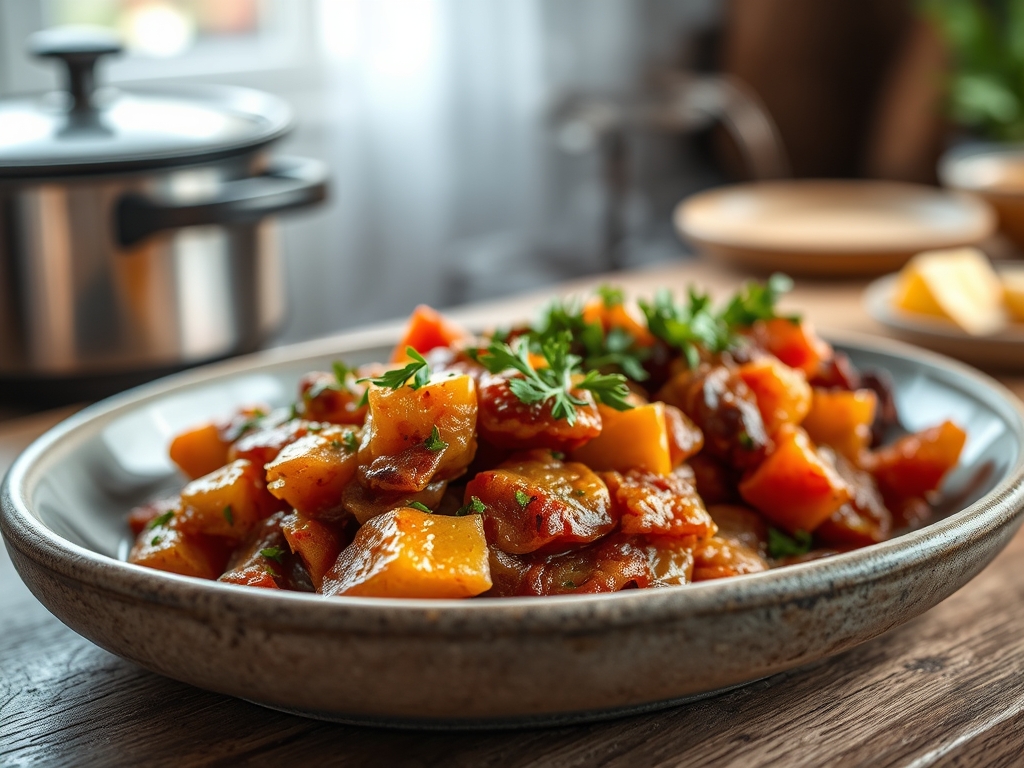
In the reference image, notice the deep, uniform mahogany color of the beef. If your meat looks pale or "boiled," you skipped the high-heat sear or overloaded the pan. If the sauce looks broken or oily, the fat was not properly skimmed during the reduction phase. To fix a dull appearance, aerate a tablespoon of cold butter into the finished sauce just before serving; this creates a glossy sheen and a luxurious mouthfeel. If the vegetables look mushy and grey, they have been over-extracted. For a professional buffet presentation, discard the cooking aromatics and replace them with freshly blanched, vibrant carrots and herbs just before the guests arrive.
THE DEEP DIVE
Macro Nutrition Profile
A standard serving (approx. 200g of meat plus sauce) provides 450 calories, 32g of Protein, 28g of Fat, and 8g of Carbohydrates. The high collagen content in short ribs breaks down into gelatin, which is excellent for gut health but adds significant caloric density.
Dietary Swaps
- Vegan: Replace beef with thick-cut "steaks" of Lion's Mane mushrooms or cauliflower steaks. Use vegetable demi-glace and pomegranate juice instead of wine for a similar depth.
- Keto: Eliminate the tomato paste and ensure the wine is a very dry variety. Serve over cauliflower mash instead of traditional potatoes.
- GF: This recipe is naturally gluten-free; however, ensure your beef broth does not contain hidden yeast extracts or thickening agents derived from wheat.
Meal Prep & Reheating Science
To maintain the molecular structure during reheating, avoid the microwave. The localized high heat can toughen the protein fibers. Instead, reheat the ribs in their sauce in a covered dish at 150 degrees Celsius (300 degrees Fahrenheit). This gentle thermal application allows the gelatin to re-liquefy without overcooking the meat. If the sauce has become too thick, whisk in a splash of beef broth to restore the original viscous flow.
THE KITCHEN TABLE
How long can I safely keep the buffet running?
Limit the service to four hours. Even if the temperature remains above 60 degrees Celsius, the texture will eventually degrade into a mushy, over-extracted state. Constant monitoring with a probe thermometer is the only way to guarantee safety.
Can I cook this on "High" to save time?
You can, but you shouldn't. High heat causes the muscle fibers to contract violently, squeezing out moisture before the collagen has time to melt. For the most succulent results, the "Low" setting is technically superior for breaking down connective tissue.
My sauce is too thin; how do I fix it quickly?
Do not use a flour roux at the end; it clouds the flavor. Instead, use a cornstarch slurry or a cold butter whisk-in. This maintains the clarity and deep color of the red wine reduction while providing the necessary body.
Is it safe to put the ceramic crock in the fridge?
No. The massive thermal mass of the ceramic will hold heat too long, raising the internal temperature of your refrigerator and keeping the food in the danger zone for hours. Transfer the contents to shallow stainless steel pans for rapid cooling.