Stop treating your side dishes like an afterthought and start viewing them as a high-stakes engineering project. We are moving past the days of waterlogged, unevenly boiled tubers that have been beaten into a gluey submission. When you deploy the Instant Pot Mashed Potatoes protocol, you are not just cooking; you are managing a rapid-fire sequence of starch gelatinization and cellular breakdown under controlled atmospheric pressure. The goal is a texture that is simultaneously dense and ethereal, a cloud of pure carbohydrate bliss that holds its shape while melting the moment it hits the palate. We are leveraging the steam-injection power of the pressure cooker to force moisture into the crystalline structure of the potato at record speeds. This is not just a shortcut for the lazy; it is a tactical advantage for the precise. By sealing the environment, we trap every volatile aromatic compound that usually escapes into the kitchen air. The result is a concentrated, piquant essence of potato that serves as the perfect canvas for high-fat emulsification.
THE DATA MATRIX
| Metric | Specification |
|---|---|
| Prep Time | 10 Minutes |
| Execution Time | 12 Minutes (at pressure) |
| Yield | 6 Standard Servings |
| Complexity (1-10) | 3 |
| Estimated Cost per Serving | $0.65 USD |
THE GATHERS
Ingredient Protocol:
- 2.25 kg / 5 lbs Yukon Gold Potatoes (peeled and cubed)
- 250 ml / 1 cup Chicken Bone Broth or Filtered Water
- 115 g / 1/2 cup Unsalted High-Fat Butter (cubed)
- 180 ml / 3/4 cup Heavy Cream or Whole Milk
- 15 g / 1 tbsp Fine Sea Salt
- 5 g / 1 tsp Freshly Cracked White Pepper
- 30 g / 2 tbsp Roasted Garlic Paste (optional)
Section A: Ingredient Quality Audit:
The primary failure point in any potato-based architecture is the selection of the raw material. If you utilize a waxy Red Bliss potato for a mash, you are inviting a gummy, translucent disaster. Waxy potatoes have low starch content and high moisture; they refuse to aerate. Always opt for Yukon Golds for a buttery finish or Russets for a fluffy, dry texture. If your potatoes feel soft or exhibit a green tint, they have been exposed to too much light and have developed solanine. This will result in a bitter, metallic aftertaste that no amount of butter can mask. Ensure your dairy is at room temperature before introduction. Adding cold cream to hot starch causes a thermal shock that tightens the cellular structure, preventing a smooth viscous flow.
THE MASTERCLASS
1. The Geometric Preparation
Peel your tubers and use a sharp chef knife or a bench scraper to ensure uniform 1.5-inch cubes. Uniformity is the soul of consistency. If your cuts vary in size, the smaller pieces will disintegrate into a starch slurry while the larger chunks remain structurally resistant.
Pro Tip: Use a digital scale to ensure you have exactly 5 pounds of potatoes. Precision in weight allows for the exact calculation of the salt-to-starch ratio, ensuring a perfectly seasoned bite every time.
2. The Pressure Infusion
Place the cubes into the inner pot and add the liquid. Do not submerge them. We are not boiling; we are steaming under pressure. Secure the lid, set the vent to sealing, and program for 12 minutes on High Pressure.
Pro Tip: Adding a sprig of rosemary or thyme to the liquid will infuse the potatoes with herbal volatiles during the high-pressure phase, embedding flavor directly into the starch granules.
3. The Controlled Depressurization
Once the timer expires, perform an immediate manual pressure release. Allowing the potatoes to sit in "Natural Release" mode for too long leads to over-gelatinization, resulting in a heavy, wet texture. Drain any excess liquid into a saucier if you plan to make a secondary gravy.
Pro Tip: The steam rising from the pot is a sign of moisture loss. Work quickly to trap the remaining heat, as it is essential for melting the fats in the next phase.
4. The Mechanical Breakdown
Do not use a food processor. The high-speed blades will shear the starch molecules, turning your mash into wallpaper paste. Use a ricer or a heavy-duty potato masher. For the ultimate professional finish, pass the potatoes through a fine-mesh tamis.
Pro Tip: Passing the potatoes through a tamis creates a uniform particle size that allows the fat to encapsulate every single starch grain, creating a velvet-like mouthfeel.
5. The Lipid Emulsification
Slowly incorporate the butter and warm cream. Fold the mixture gently using a silicone spatula. We want to render the fat into the starch without overworking the proteins. Season with salt and white pepper at the very end.
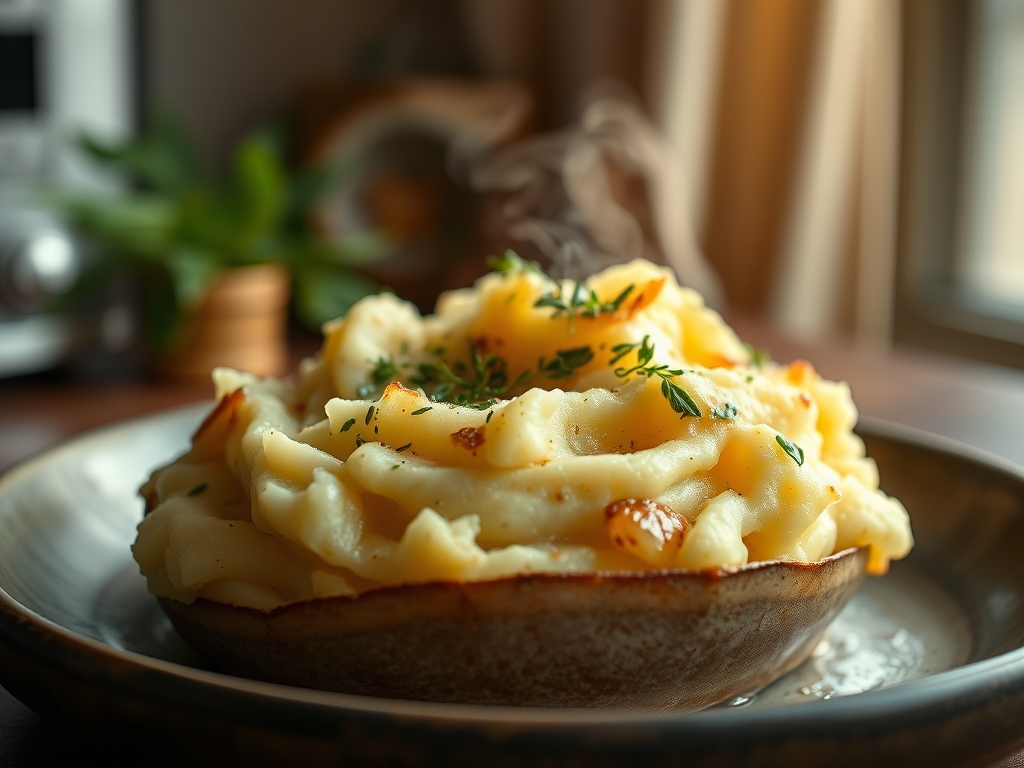
Pro Tip: Using white pepper instead of black maintains the pristine, ivory aesthetic shown in the Masterclass photo, avoiding the "speckled" look of debris in a clean field.
Section B: Prep & Timing Fault-Lines:
The most common human error is the "Wait and See" approach to seasoning. If you do not salt the cooking liquid, the interior of the potato remains bland regardless of how much salt you sprinkle on top later. Another timing hazard is the dairy temperature. If you forget to warm your cream, place the cream vessel in a warm water bath while the Instant Pot is under pressure. This ensures that when the potatoes are ready, the dairy is at the optimal 140 degrees Fahrenheit for seamless integration.
THE VISUAL SPECTRUM
Section C: Thermal & Visual Troubleshooting:
Look at the Masterclass photo above. Notice the "peak and valley" topography. This indicates a mash with enough structural integrity to hold air. If your potatoes look flat or glossy, you have likely over-mixed them or added too much liquid. If the color is greyish, your potatoes were likely oxidized before cooking; keep peeled potatoes in a bowl of cold water to prevent this. For a dull appearance, a final "mount" of cold butter (monter au beurre) just before serving will provide a professional sheen that reflects light and signals richness to the diner.
THE DEEP DIVE
Macro Nutrition Profile:
A standard serving (approx. 200g) contains roughly 240 calories, 12g of fat, 32g of carbohydrates, and 4g of protein. The potassium content is significant, making this a functional recovery meal for high-output individuals.
Dietary Swaps:
For a Vegan audit, replace butter with a high-quality olive oil or coconut fat and use unsweetened cashew milk for the cream component. For a Keto-adjacent version, swap 50% of the potatoes for steamed cauliflower, though the starch gelatinization will be significantly different. This recipe is naturally Gluten-Free, provided your broth source is certified.
Meal Prep & Reheating Science:
Potatoes suffer from "Retrogradation" when cooled, where starch molecules realign into a hard, crystalline structure. To reheat, add a splash of milk and heat gently in a double boiler. Avoid the microwave if possible, as it creates uneven hot spots that can cause the fats to separate from the solids.
THE KITCHEN TABLE
Why are my potatoes gummy?
You likely overworked the starch or used a high-speed blender. This shears the cells, releasing excess amylose. Use a ricer and fold gently by hand to maintain the delicate cellular matrix.
Can I use water instead of broth?
Yes, but you lose a layer of depth. Broth provides umami and minerals that enhance the natural earthiness of the Yukon Golds. If using water, ensure you increase the salt slightly to compensate.
How do I fix potatoes that are too salty?
Fold in a small amount of unsalted sour cream or more plain mashed potatoes. The acidity in the sour cream helps distract the palate from the sodium overload while adding a pleasant tang.
Can I make these ahead of time?
Absolutely. Store them in an airtight container. When reheating, use a slow cooker on the "warm" setting with an extra knob of butter to maintain the viscous texture and prevent the surface from drying out.