Forget the frantic, sweat-soaked ritual of standing over a copper pot for forty minutes; we are here to discuss the structural engineering of flavor. The Multi Cooker Mushroom Risotto is not merely a meal; it is a high-velocity collision between fungal biology and pressurized starch suspension. When you engage that locking lid, you are initiating a controlled environment where moisture cannot escape, forcing every milligram of earthy essence back into the heart of the grain. We are looking for a result that is aggressively creamy, possessing a viscous fluidity that ripples across the plate like molten silk. The goal is a piquant depth that only comes from the strategic Maillard reaction of forest floor fungi. This is culinary infrastructure at its peak. We are leveraging modern thermal dynamics to achieve what traditionalists thought required a lifetime of wrist fatigue. Prepare your workspace; we are about to render the humble mushroom into a masterpiece of liquid gold and ivory starch.
THE DATA MATRIX
| Metric | Specification |
|---|---|
| Prep Time | 15 Minutes |
| Execution Time | 25 Minutes |
| Yield | 4 Servings |
| Complexity | 4 / 10 |
| Estimated Cost per Serving | $3.50 |
THE GATHERS
Ingredient Protocol:
- Arborio or Carnaroli Rice: 400g / 2 cups
- Mixed Mushrooms (Cremini, Shiitake, Oyster): 450g / 1 lb
- Vegetable or Chicken Stock: 950ml / 4 cups
- Dry White Wine (Pinot Grigio or Sauvignon Blanc): 120ml / 0.5 cup
- Shallots, finely minced: 60g / 2 medium
- Garlic, microplaned: 15g / 3 cloves
- Unsalted Butter: 55g / 4 tbsp
- Parmigiano Reggiano, freshly grated: 75g / 0.75 cup
- Fresh Thyme: 5g / 1 tbsp
- Extra Virgin Olive Oil: 30ml / 2 tbsp
- Kosher Salt and Black Pepper: To taste
Section A: Ingredient Quality Audit:
The primary failure point in any Multi Cooker Mushroom Risotto is the "Water-Logged Fungi" syndrome. If your mushrooms are damp from washing, they will steam rather than sear, resulting in a rubbery texture and muted flavor. Use a damp cloth or a soft brush to clean them. If your rice appears dusty or broken, do not rinse it. Rinsing removes the surface starch essential for the final emulsification. If you find your stock is too salty, dilute it with 20 percent water; the pressure cooking process concentrates sodium profiles significantly. Finally, ensure your wine is crisp and high in acidity; a flabby or sweet wine will destroy the brightness of the dish.
THE MASTERCLASS
1. The Fungal Sear
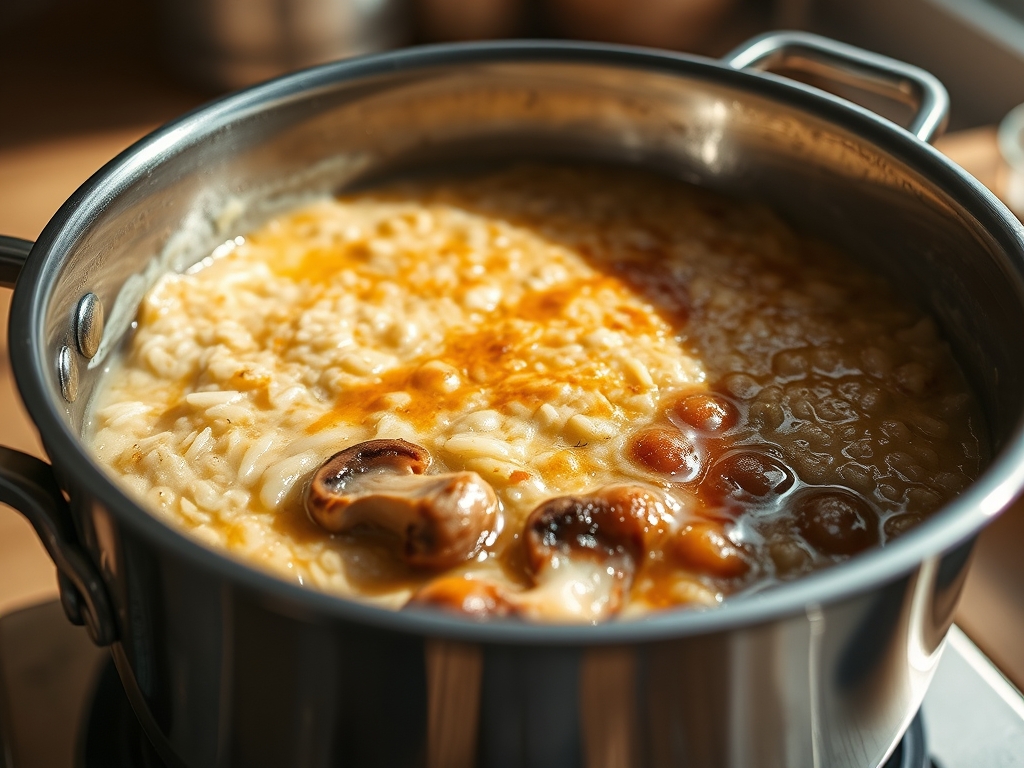
Set your multi cooker to the "Sauté" function on high. Add the olive oil and half the butter. Once the fat begins to shimmer, introduce the mushrooms in a single layer. Do not crowd the pot. Allow them to sit undisturbed for three minutes to initiate the Maillard reaction. Flip and continue until deep brown and fragrant.
Pro Tip: Use a heavy-duty bench scraper to move the mushrooms efficiently. This ensures you are scraping up the "fond" (browned bits) which contains the highest concentration of umami. Science dictates that browning occurs best when moisture is minimized.
2. Aromatics and Grain Toasting
Add the shallots and thyme to the fungi. Sauté until translucent. Introduce the rice and stir constantly for two minutes. You are looking for the edges of the grains to become translucent while the center remains opaque. This "toasting" phase creates a protective shell around the grain, preventing it from turning into mush under pressure.
Pro Tip: Use a digital scale to measure your rice and liquid precisely. In a sealed environment, the ratio of 1 part rice to 2.4 parts liquid is the golden rule for perfect al dente results.
3. The Deglaze
Pour in the white wine. Use a wooden spoon or heat-resistant spatula to vigorously scrape the bottom of the pot. The acidity in the wine acts as a solvent, lifting the caramelized proteins into the liquid. Continue simmering until the wine has reduced by half and the sharp scent of alcohol has dissipated.
Pro Tip: Professional chefs use a saucier for this on a stovetop, but in a multi cooker, you must ensure no bits are stuck to the bottom to avoid the "Burn" error code during the pressure cycle.
4. Pressure Integration
Pour in the stock all at once. Stir once to ensure no grains are clinging to the sides above the water line. Lock the lid and set the machine to "High Pressure" for 6 minutes. Ensure the steam release valve is set to the "Sealing" position.
Pro Tip: Use a silicone spatula to wipe down the inner walls of the pot before sealing. Stray grains left high on the walls will not cook properly and will introduce unpleasant "crunch" into your creamy masterpiece.
5. The Emulsification (Mantecatura)
Once the timer sounds, perform a "Quick Release" of the pressure. Open the lid; the risotto will look slightly soupy. This is intentional. Add the remaining butter and the Parmigiano Reggiano. Stir vigorously for 60 to 90 seconds. This mechanical action releases the final burst of starch, creating a natural emulsion with the fats.
Pro Tip: This stage is known as "Mantecatura." By using a whisk or heavy spoon, you aerate the mixture, giving it that signature "all'onda" (wavy) consistency where it flows like lava when the plate is tilted.
Section B: Prep & Timing Fault-Lines:
The most common human error is the "Delayed Release." If you allow the pressure to drop naturally (Natural Release), the residual heat will overcook the rice, turning your risotto into a thick porridge. You must be ready to vent the steam the second the timer hits zero. Additionally, if your shallots are cut too coarsely, they will not dissolve into the sauce, creating a structural imbalance. Use a sharp chef knife to achieve a fine mince that disappears into the cream.
THE VISUAL SPECTRUM
Section C: Thermal & Visual Troubleshooting:
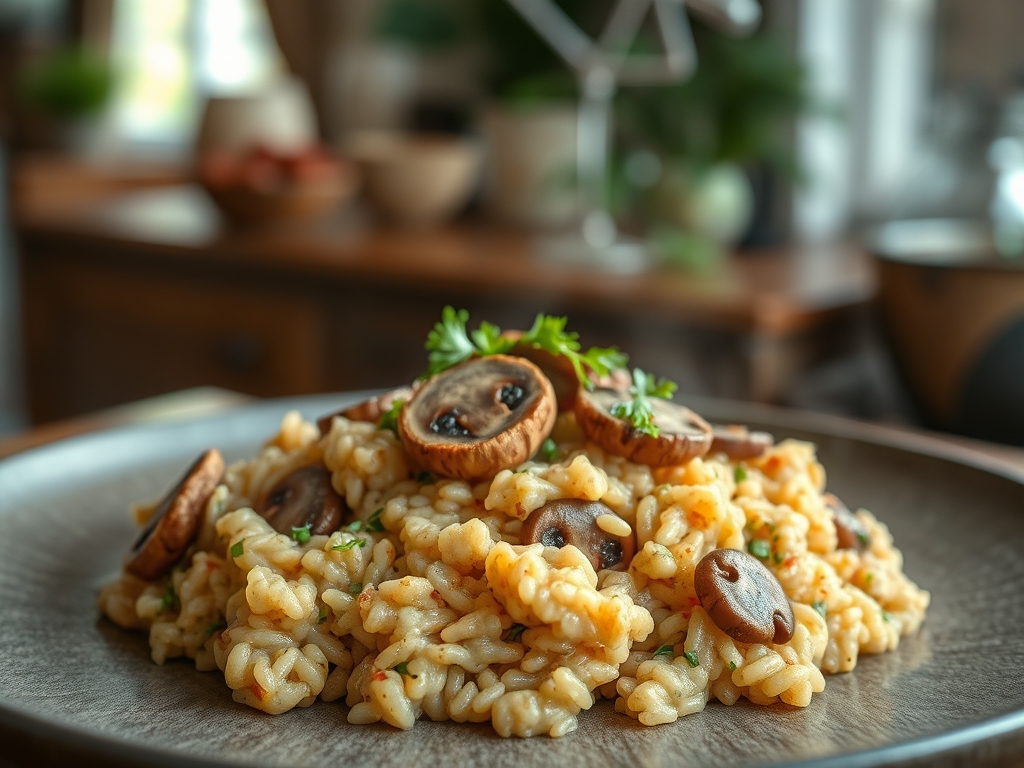
Look closely at the Masterclass photo. Notice the "Gloss Factor." If your risotto looks matte or dull, you have insufficient fat or the temperature has dropped too low to maintain the emulsion. Add a splash of hot stock or a knob of butter to restore the sheen. If the color is pale rather than golden-brown, your initial mushroom sear was insufficient. You can compensate by adding a teaspoon of soy sauce or Worcestershire sauce to deepen the hue without altering the profile. Finally, if the rice is "clumping" rather than flowing, it is too dry. The "all'onda" effect seen in the image requires the rice to move as a single, fluid unit.
THE DEEP DIVE
Macro Nutrition Profile:
A standard serving contains approximately 450 calories, 12g of protein, 58g of carbohydrates, and 18g of fat. The mushrooms provide essential B vitamins and selenium, making this a nutrient-dense comfort food.
Dietary Swaps:
- Vegan: Replace butter with a high-quality olive oil and use nutritional yeast or a cashew-based "parmesan" for the creamy finish.
- Keto: This is a grain-based dish; however, you can mimic the profile using riced cauliflower, though you must skip the pressure cooking step and sauté for only 5 minutes.
- GF: Arborio rice is naturally gluten-free; simply ensure your stock is certified GF.
Meal Prep & Reheating Science:
Risotto is notorious for "seizing" in the fridge as the starches retrograde. To reheat, add a splash of water or milk and heat gently on the stovetop while stirring. Do not microwave on high power; this will cause the fats to separate, leaving you with greasy rice.
THE KITCHEN TABLE
Can I use brown rice for this?
No. Brown rice has the bran intact, which prevents the release of the surface starch necessary for creaminess. It requires significantly more liquid and triple the cooking time, resulting in a completely different texture.
What if I don't have white wine?
Substitute with a tablespoon of lemon juice or white wine vinegar diluted in the stock. The acidity is crucial for balancing the heavy fats and the earthy notes of the mushrooms.
Why is my risotto crunchy?
Either the pressure was not maintained or the rice-to-liquid ratio was off. Add a half cup of hot stock and sauté for 2 more minutes with the lid off to finish the softening process.
Can I use dried mushrooms?
Absolutely. Rehydrate them in hot water first. Use the soaking liquid (strained through a coffee filter) as part of your stock measurement to double the umami impact of the dish.