Listen to the hum of the heating element; that is the sound of a culinary revolution occurring within a pressurized chamber. We are moving beyond the era of scorched pots and unevenly hydrated grains. When you execute a Rice Cooker Spanish Rice, you are not just making a side dish; you are conducting a high-stakes symphony of lycopene suspension and starch gelatinization. The goal is a grain that stands independent and proud, coated in a piquant emulsion of tomato solids and aromatic oils, rather than a weeping mass of over-saturated mush. We demand precision. We demand a vibrant, sunset-hued palette that tastes of toasted cumin and toasted success. This is about leveraging automation to achieve artisanal results. By the time the steam vent finishes its final exhale, your kitchen will be infused with the scent of caramelized onions and smoked paprika. We are here to audit the process, eliminate the variables, and ensure that every single grain of rice achieves its maximum textural potential through thermal consistency.
THE DATA MATRIX
| Metric | Specification |
|---|---|
| Prep Time | 12 Minutes |
| Execution Time | 25 to 35 Minutes |
| Yield | 4 to 6 Servings |
| Complexity (1-10) | 3 |
| Estimated Cost per Serving | $0.85 USD |
THE GATHERS
Ingredient Protocol:
- Long-grain White Rice: 400g / 2 cups (Rinsed until effluent is clear)
- Chicken or Vegetable Stock: 475ml / 2 cups (Low sodium preferred)
- Tomato Sauce: 225ml / 8 oz (High viscosity)
- Neutral Oil or Lard: 30ml / 2 tbsp
- Yellow Onion: 110g / 1 small (Finely diced)
- Garlic Cloves: 3 units (Microplaned)
- Tomato Paste: 15ml / 1 tbsp (Double concentrated)
- Smoked Paprika: 5ml / 1 tsp
- Ground Cumin: 2.5ml / 0.5 tsp
- Kosher Salt: 7.5ml / 1.5 tsp
- Fresh Cilantro: 15g / 0.25 cup (For garnish)
Section A: Ingredient Quality Audit:
The primary failure point in Rice Cooker Spanish Rice is the starch-to-liquid ratio, often exacerbated by low-quality grains. If your rice is "chalky" or breaks easily when dry, it lacks the structural integrity to withstand the steam cycle. Fix this by sourcing aged long-grain varieties. If your tomato sauce is too watery, it will dilute the flavor profile; compensate by increasing the tomato paste to render a deeper umami base. Always check the salinity of your stock. If using a bouillon cube, reduce the added kosher salt by half to prevent a sodium-induced palate fatigue. If the spices lack a pungent aroma when opened, they are oxidized. Toast them in a dry pan for thirty seconds before adding to the cooker to infuse the oils back into the powder.
THE MASTERCLASS
1. The Starch Decontamination Phase
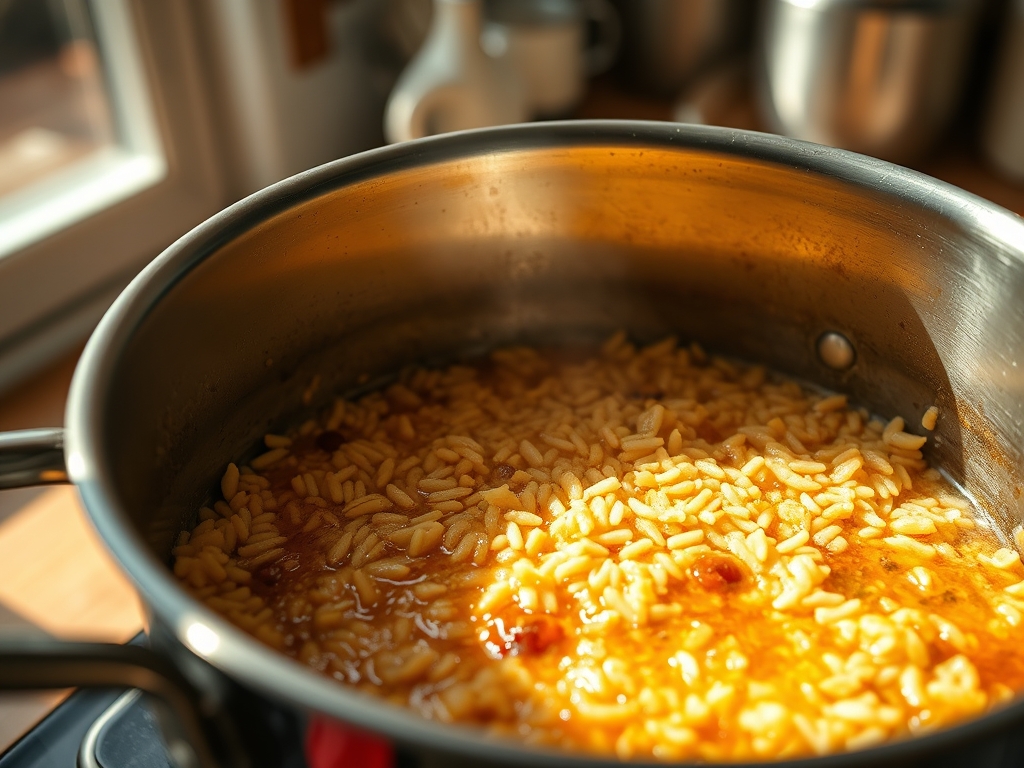
Place your rice in a fine-mesh strainer and rinse under cold water. Use your fingers to aerate the grains until the water runs completely transparent. This removes surface starch that causes clumping.
Pro Tip: Use a digital scale to measure your rice and liquid by weight rather than volume. Volumetric measurements are prone to "packing" errors; mass is the only constant in a high-performance kitchen.
2. The Aromatics Pre-Sauté
If your rice cooker has a "Sauté" function, use it. If not, use a saucier on the stovetop. Heat the oil and sauté the onions until translucent. Add the garlic and tomato paste, stirring constantly to induce the Maillard reaction.
Pro Tip: Use a silicone spatula or a bench scraper to ensure no tomato paste sticks to the bottom. This prevents the "burn" sensor on your rice cooker from prematurely terminating the cycle.
3. The Molecular Integration
Add the rinsed rice to the sautéed aromatics. Stir for two minutes until the grains are translucent at the edges and smell toasted. This creates a lipid barrier around each grain, ensuring they remain separate after cooking.
Pro Tip: This "toasting" step is where the flavor profile transitions from boiled rice to authentic Spanish Rice. The heat creates new flavor compounds that cannot be replicated by steaming alone.
4. The Automated Hydration Cycle
Transfer the toasted rice mixture to the rice cooker bowl. Pour in the stock and tomato sauce. Add the cumin, paprika, and salt. Close the lid and select the "Normal" or "White Rice" setting.
Pro Tip: Do not open the lid during the cycle. Every time the seal is broken, you lose the pressurized steam required to gelatinize the starch cores of the rice grains.
5. The Rest and Aeration Protocol
Once the timer sounds, let the rice sit undisturbed on the "Warm" setting for ten minutes. Open the lid and use a rice paddle to gently "fold" the rice from the bottom up.
Pro Tip: Folding, rather than stirring, prevents the grains from breaking. This final rest allows the moisture to redistribute evenly, ensuring the top layer is as tender as the bottom.
Section B: Prep & Timing Fault-Lines:
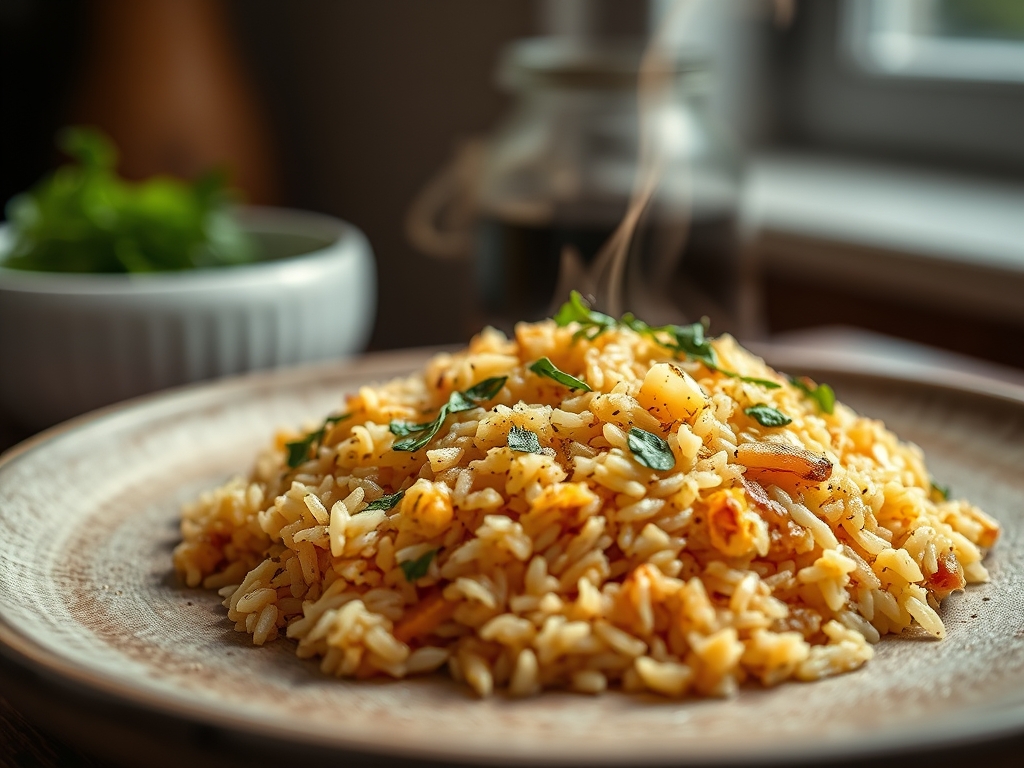
Human error often manifests in the "rush." If you skip the rinsing phase, you will end up with a "risotto" texture rather than the distinct grains shown in the Masterclass photo. If the rice cooker triggers the "Warm" setting too early, it usually indicates a lack of liquid or a heavy "fond" (burnt bits) at the bottom. To fix this, add 30ml of hot stock and restart the cycle. Always ensure your aromatics are diced to a uniform 3mm size; large chunks of onion will release moisture at different rates, leading to localized "wet spots" in the final product.
THE VISUAL SPECTRUM
Section C: Thermal & Visual Troubleshooting:
Referencing the Masterclass photo, your Rice Cooker Spanish Rice should exhibit a deep, uniform ochre hue. If the rice looks pale or "blotchy," the tomato paste was not properly incorporated into the liquid. If the top layer looks dry while the bottom is viscous, your cooker's heating element may be uneven; a quick fold halfway through the "Warm" rest period can mitigate this. For a "burnt" appearance on the bottom (the coveted socarrat), some high-end cookers have a "Crisp" setting. If yours does not, do not attempt to force it, as you risk scorching the delicate tomato sugars and creating a bitter aftertaste.
THE DEEP DIVE
Macro Nutrition Profile
A standard serving (approx. 150g) contains roughly 210 calories, 4g of protein, 38g of carbohydrates, and 5g of fat. The lycopene from the tomato products acts as a powerful antioxidant, and the use of chicken stock adds a minor collagen boost.
Dietary Swaps (Vegan/Keto/GF)
- Vegan: Substitute chicken stock with a rich mushroom or vegetable broth. Ensure the "neutral oil" is plant-based (avocado or grapeseed).
- Keto: This is a grain-heavy dish. To approximate the flavor, use riced cauliflower, but reduce the liquid by 80% and cook on a "Quick" cycle to avoid mush.
- Gluten-Free: This recipe is naturally gluten-free; however, audit your chicken stock labels for hidden maltodextrin or yeast extracts.
Meal Prep & Reheating Science
Rice undergoes "starch retrogradation" when cooled, making it firm. To reheat, add a teaspoon of water per cup of rice and cover tightly. This recreates a mini-steam chamber, vibrating the water molecules to soften the crystalline starch structures without making the dish soggy.
THE KITCHEN TABLE
Why is my Spanish rice mushy?
You likely over-hydrated the grains or skipped the rinsing process. Excess surface starch creates a glue-like bond between grains. Always maintain a strict 1:1.25 ratio of rice to total liquid, including the tomato sauce.
Can I use brown rice instead?
Yes, but you must adjust the "Data Matrix." Brown rice requires 25% more liquid and a longer "Brown Rice" cycle. The bran layer prevents quick hydration, so a 30-minute pre-soak is highly recommended for optimal texture.
What if I don't have tomato sauce?
You can deglaze the pan with crushed tomatoes or even a high-quality salsa. If using salsa, reduce the added salt and cumin, as the salsa already contains these flavor precursors.
How do I get more color?
The secret is the tomato paste. Sautéing the paste until it turns a dark rust color before adding the liquid will provide that deep, professional-grade aesthetic seen in culinary photography.
Is it safe to leave in the cooker?
The "Warm" setting is safe for 2 to 3 hours. Beyond that, the rice begins to lose its structural integrity and may develop a "crust" against the heating element due to prolonged moisture evaporation.