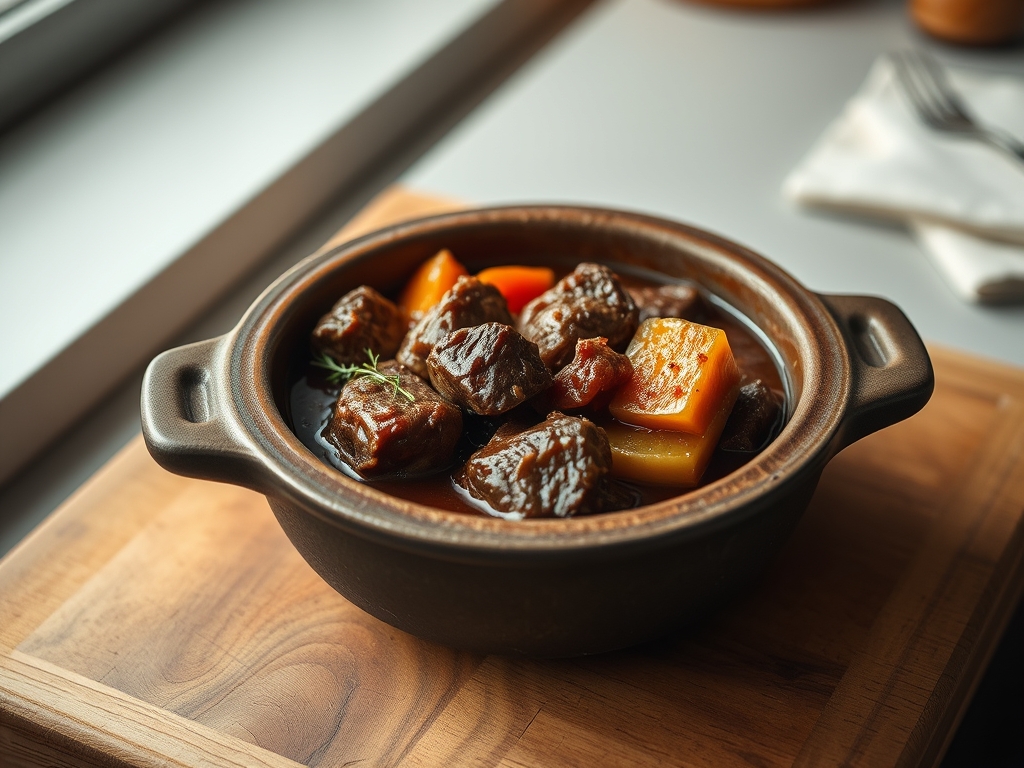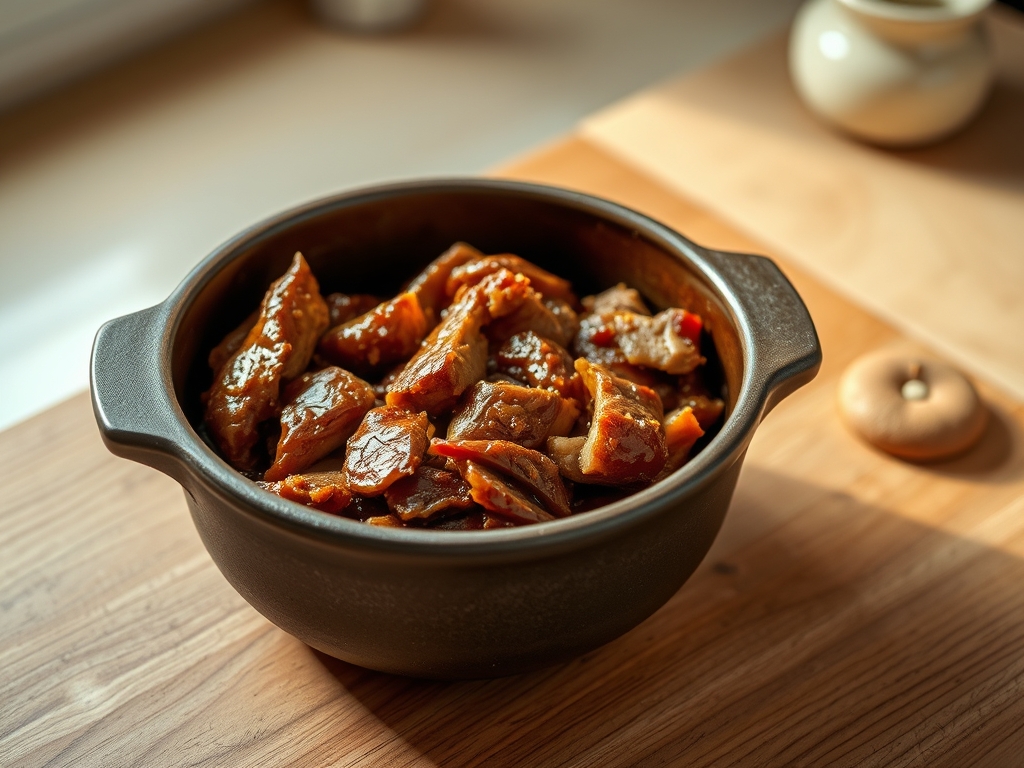
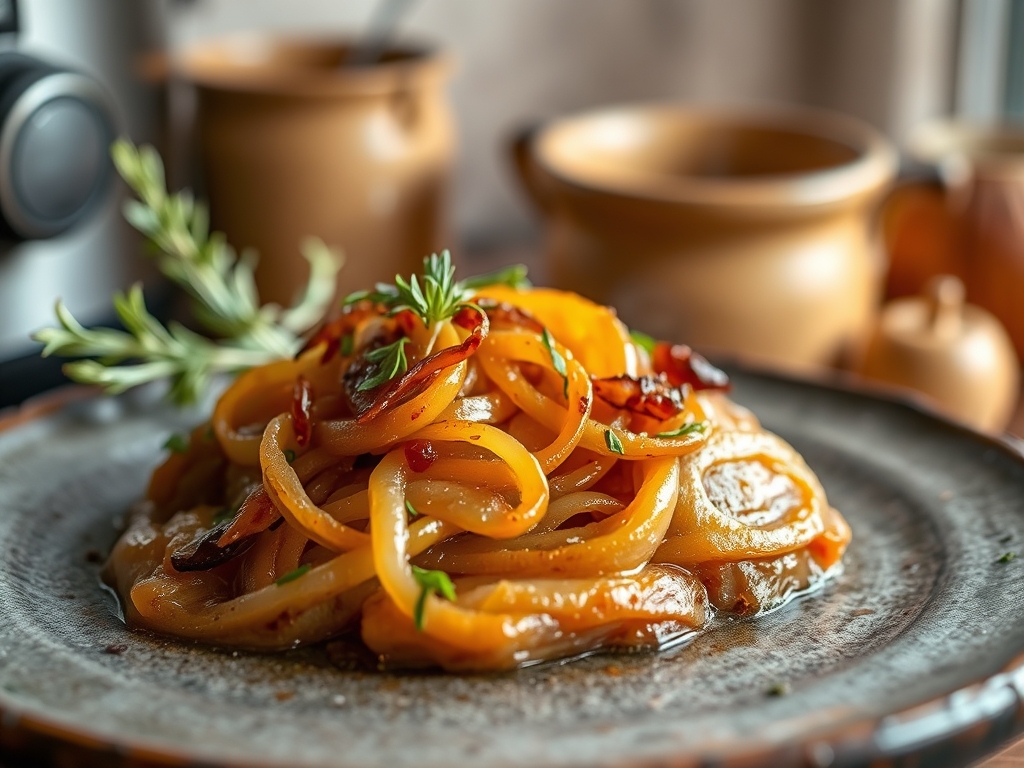
Listen closely because your kitchen is currently a crime scene of wasted potential. You are likely accustomed to the frantic, tear-streaked ritual of hovering over a Dutch oven for ninety minutes, desperately praying the sugar in your alliums transforms into gold before the bottom of the pan turns to carbon. That era is over. We are pivoting to a high-efficiency infrastructure model where the machine does the heavy lifting. The Slow Cooker French Onion protocol is not just a recipe; it is a long-term investment in deep-tissue flavor. We are talking about a broth so viscous and piquant that it demands respect from your palate. By leveraging the low, consistent thermal energy of a slow cooker, we bypass the volatility of a stovetop flame. We are aiming for a total cellular breakdown of the onion, transforming rigid fibers into a jammy, mahogany essence that anchors the entire soup. This is the audit of your culinary life. Prepare to optimize.
THE DATA MATRIX
| Metric | Specification |
|---|---|
| Prep Time | 25 Minutes |
| Execution Time | 10 to 12 Hours |
| Yield | 2.4 Liters / 10 Cups |
| Complexity (1-10) | 3 |
| Estimated Cost per Serving | $1.45 USD |
THE GATHERS
Ingredient Protocol:
- 2.3 kg / 5 lbs Yellow Onions (sliced pole-to-pole)
- 115g / 1/2 cup Unsalted Butter (high-fat European style)
- 15ml / 1 tbsp Balsamic Vinegar
- 30ml / 2 tbsp Dry Sherry
- 1.9L / 8 cups Beef Bone Broth (low sodium, high gelatin content)
- 10g / 2 tsp Kosher Salt
- 5g / 1 tsp Fresh Thyme Leaves
- 2 Bay Leaves
- 1 French Baguette (stale or toasted)
- 300g / 10.5 oz Gruyere Cheese (shredded)
Section A: Ingredient Quality Audit:
The primary failure point in most onion broths is the onion selection itself. If your onions are sprouting or feel soft, the sugar-to-water ratio is compromised; you will end up with a bitter, sulfurous mess rather than a sweet caramelization. Technical Fix: If your onions lack natural sweetness, add 5g of brown sugar to jumpstart the Maillard reaction. Furthermore, avoid "cooking wine" at all costs. These are laden with salt and artificial stabilizers that will ruin the clarity of your broth. Use a real, dry Sherry to deglaze the sugars and provide the necessary acidity to balance the lipid profile of the butter.
THE MASTERCLASS
Step 1: The Allium Architecture
Slice your onions into uniform 6mm half-moons using a sharp mandoline or a heavy chef knife. Consistency is non-negotiable here; uneven slices lead to uneven sugar release. Toss these into the slow cooker with the melted butter and salt.
Pro Tip: Use a digital scale to weigh your onions after peeling. The ratio of onion mass to vessel volume determines the moisture trap. If the pot is too empty, the onions will dry out before they render their juices.
Step 2: The Extended Thermal Cycle
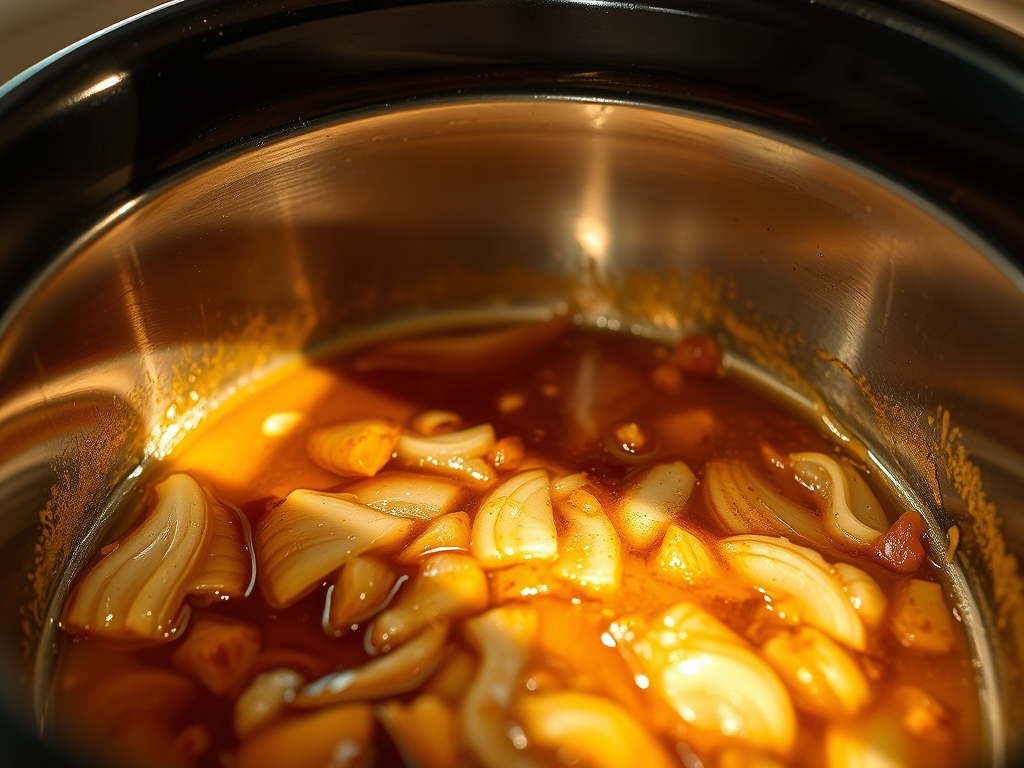
Set your slow cooker to "Low" and walk away for 10 to 12 hours. Do not open the lid. Every time you lift the lid, you lose the accumulated steam required to soften the cellulose. You are looking for a deep, chocolate-brown hue.
Pro Tip: The science here is the Maillard reaction, which usually requires high heat. However, by extending the time to 12 hours, we achieve the same molecular transformation at a lower temperature, preserving the delicate aromatic compounds that usually evaporate on a stove.
Step 3: The Deglaze and Infuse
Once the onions are jammy and dark, use a bench scraper or wooden spoon to stir in the balsamic vinegar and sherry. This will deglaze the concentrated sugars stuck to the sides of the ceramic insert. Pour in the beef broth, thyme, and bay leaves.
Pro Tip: Use a saucier to pre-warm your beef broth before adding it to the slow cooker. Introducing cold liquid to a hot ceramic pot can cause thermal shock and slows down the infusion of the herbs.
Step 4: The Final Reduction
Switch the slow cooker to "High" for the final hour. This allows the flavors to marry and the liquid to slightly reduce, increasing the viscous quality of the soup. Taste for seasoning and adjust the salt levels only at this final stage.
Pro Tip: Use a refractometer if you are feeling truly obsessive, but a simple spoon test works. The broth should coat the back of the spoon, indicating sufficient gelatin extraction from the beef broth.
Section B: Prep & Timing Fault-Lines:
The most common human error is impatience. If you pull the onions at the 6-hour mark because they look "brown enough," you are failing the audit. They might look brown, but the sugars have not fully developed the complex pyrazines that give French Onion soup its signature depth. Another fault-line is the "High" setting. Do not attempt to rush this by starting on "High" for 4 hours; the onions will scorch on the edges while remaining raw in the center. Slow and steady is the only way to ensure a uniform cellular collapse.
THE VISUAL SPECTRUM
Section C: Thermal & Visual Troubleshooting:
Referencing the Masterclass photo above, notice the gradient of the broth. It should be a clear, dark amber, not cloudy. If your broth looks "muddy," you likely stirred the onions too aggressively, breaking them into a pulp. The Fix: Stir gently with a silicone spatula to keep the onion strands intact. If the color is too pale, your onions did not caramelize long enough. You can "cheat" the color by adding a teaspoon of Worcestershire sauce, but your integrity will be compromised. If you see a layer of oil on top, your butter has separated. Use a fat separator or a chilled spoon to skim the excess lipids from the surface before serving.
THE DEEP DIVE
Macro Nutrition Profile:
A standard 350ml serving (including bread and cheese) contains approximately 420 calories, 22g of fat, 35g of carbohydrates, and 18g of protein. The high sodium content is the primary concern; always opt for low-sodium bone broth to maintain control over the final mineral balance.
Dietary Swaps:
- Vegan: Replace beef broth with a mushroom and kombu dashi for maximum umami. Substitute butter with a high-quality neutral oil and use vegan cashew-based gruyere.
- Keto: Eliminate the baguette. Top the soup with a thick layer of melted cheese and perhaps some crisped pancetta for texture.
- GF: Use a certified gluten-free baguette or thick-cut toasted cauliflower steaks as the vessel for the cheese.
Meal Prep & Reheating Science:
This soup is a molecular masterpiece that actually improves with age. As it sits in the refrigerator, the polyphenols in the onions continue to interact with the proteins in the broth. To reheat, avoid the microwave as it can turn the onions rubbery. Use a small pot on the stove over medium heat to gently aerate the liquid as it warms, then finish under the broiler with fresh bread and cheese.
THE KITCHEN TABLE
Why is my soup bitter?
Bitterness usually stems from scorched onions or poor-quality wine. If the onions catch on the bottom of the slow cooker, that carbon flavor will permeate the entire batch. Next time, ensure the butter is evenly distributed before starting the cycle.
Can I use white onions instead of yellow?
White onions have a higher water content and lower sugar profile. They will work in a pinch, but the result will be less sweet and the caramelization process will take significantly longer to reach the desired mahogany depth.
How do I get the perfect cheese crust?
The secret is the broiler. Place your oven-safe crocks on a baking sheet. Ensure the bread is toasted first so it doesn't get soggy. Pile the cheese high and watch it like a hawk until it bubbles and browns.
Does the broth brand really matter?
Absolutely. The broth is 70 percent of the dish. A cheap, water-based bouillon will lack the mouthfeel provided by a gelatin-rich bone broth. If the broth doesn't gel when cold, it won't provide a luxurious texture when hot.