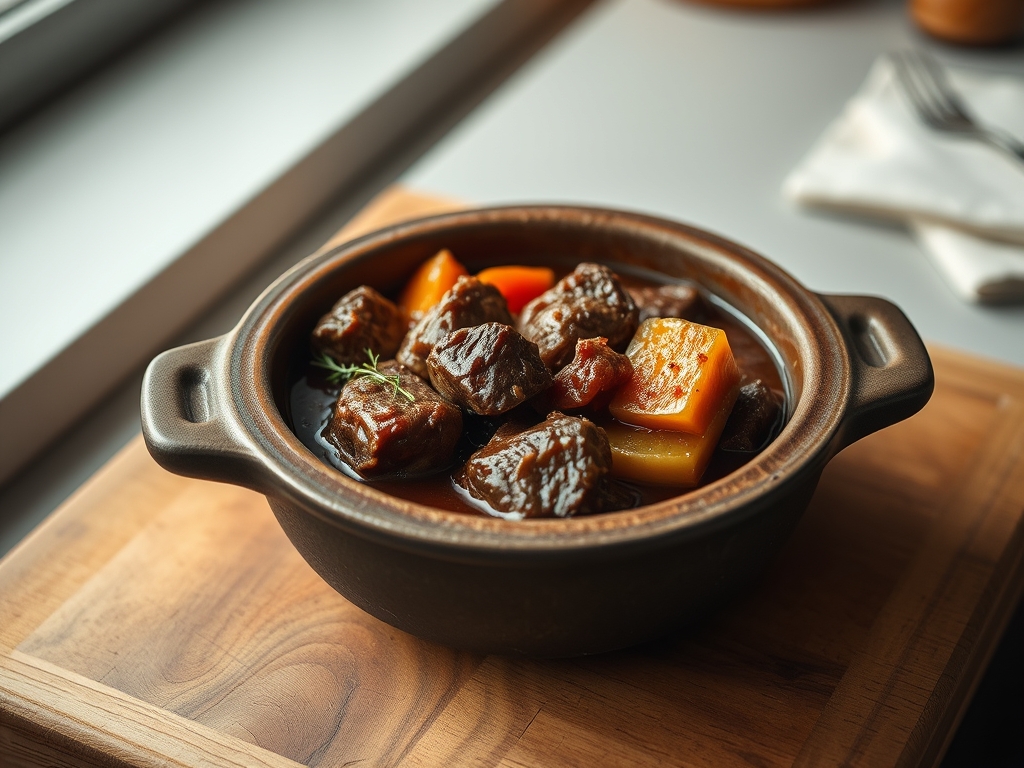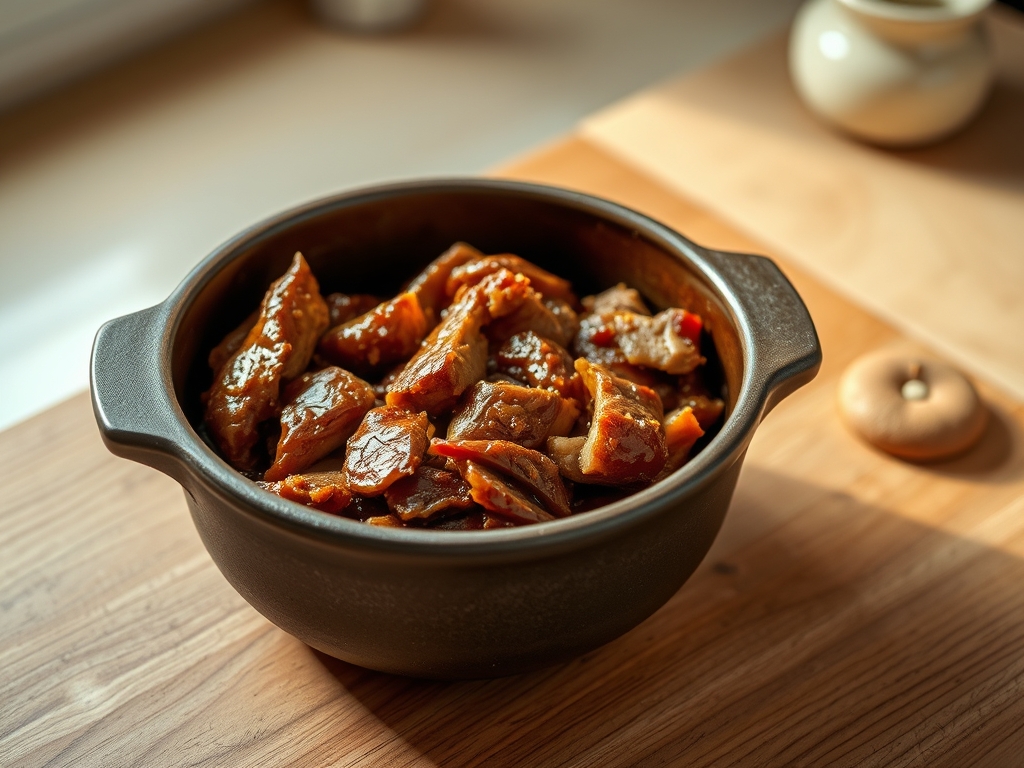
Listen up, kitchen engineers. We are not just making dinner; we are conducting a high-stakes thermal extraction. The goal is simple: achieve the deep, soul-shattering complexity of a six-hour braise in under an hour. When you deploy an Instant Pot Beef Stew, you are weaponizing atmospheric pressure to force moisture into muscle fibers that would otherwise resist your advances for half a day. Imagine the scent of rendered bovine fat colliding with the sharp, aromatic punch of thyme and rosemary. The air in your kitchen should feel heavy with the promise of umami. We are looking for beef that collapses at the mere suggestion of a fork and a gravy so viscous it coats the back of a spoon like velvet. This is not a slow cooker tragedy; this is a high-velocity flavor collision. If you are still browning meat in a flimsy non-stick pan, stand down. We are moving into the realm of high-PSI infrastructure where every second of thermal flux counts toward the final, glorious mouthfeel.
THE DATA MATRIX
| Metric | Specification |
|---|---|
| Prep Time | 20 Minutes |
| Execution Time | 45 Minutes |
| Yield | 6 Servings |
| Complexity (1-10) | 4 |
| Estimated Cost per Serving | $4.50 USD |
THE GATHERS
Ingredient Protocol:
- 1.4 kg / 3 lbs Beef Chuck, cubed into 1.5 inch pieces
- 30 ml / 2 tbsp Neutral Oil (Avocado or Grapeseed)
- 1 large Yellow Onion, diced
- 3 cloves Garlic, minced
- 250 ml / 1 cup Dry Red Wine (Cabernet or Merlot)
- 500 ml / 2 cups Low-Sodium Beef Bone Broth
- 30 ml / 2 tbsp Tomato Paste
- 15 ml / 1 tbsp Worcestershire Sauce
- 450 g / 1 lb Yukon Gold Potatoes, chopped
- 300 g / 3 large Carrots, sliced into rounds
- 2 sprigs Fresh Thyme
- 1 sprig Fresh Rosemary
- 15 g / 2 tbsp Cornstarch (slurry with 30 ml water)
- 10 g / 2 tsp Kosher Salt
- 5 g / 1 tsp Black Pepper
Section A: Ingredient Quality Audit:
If your beef looks pale or wet, you are dealing with "supermarket purge." This excess moisture will prevent the Maillard reaction. Fix: Pat the meat bone-dry with paper towels and salt it 30 minutes before searing to draw out surface proteins. If your carrots are limp, they lack the cellular structure to survive high pressure. Fix: Cut them into larger, 1-inch chunks to ensure they retain a "toothsome" bite rather than turning into orange mush. If your broth tastes like salt water, you lack gelatin. Fix: Add a teaspoon of unflavored gelatin to the broth before pouring it in to mimic the body of a long-term bone reduction.
THE MASTERCLASS
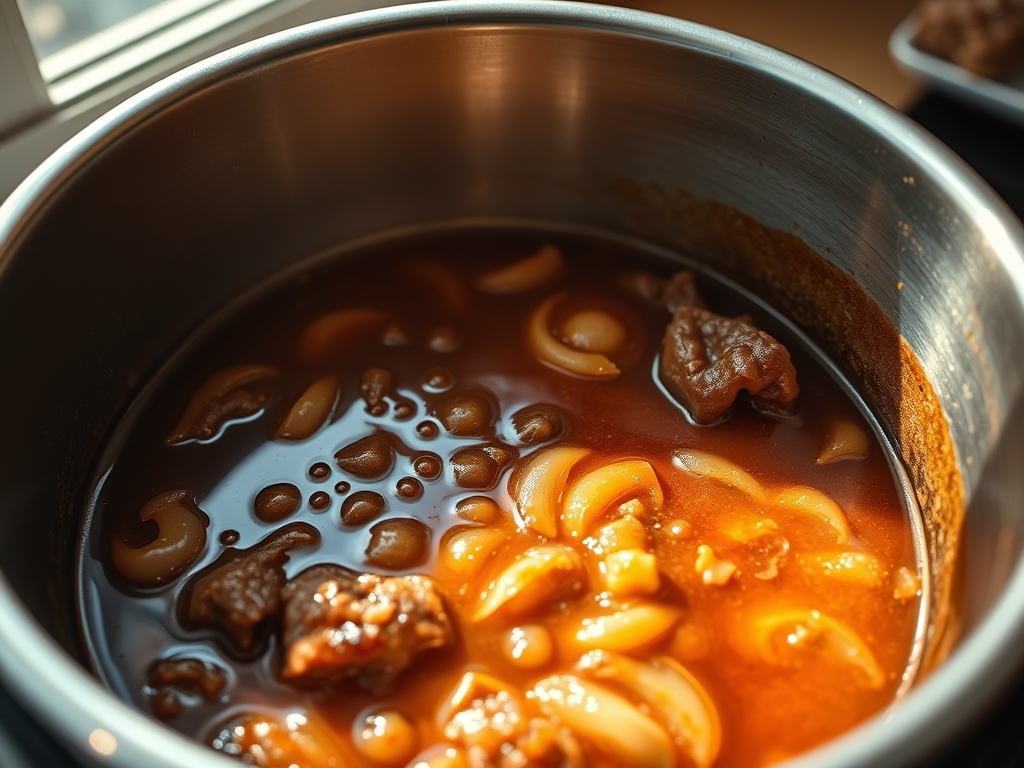
Step 1: The Maillard Ignition
Set your pressure cooker to the highest "Sauté" setting. Once the display reads "Hot," add your oil and sear the beef in batches. Do not crowd the liner. You want a dark, mahogany crust on at least two sides of every cube.
Pro Tip: Use a digital scale to ensure even portioning. Searing creates melanoidins, the flavor compounds that provide the "browned" taste. If you skip this, your stew will taste boiled rather than braised. Use a bench scraper to quickly clear your cutting board of aromatics while the meat sears.
Step 2: The Aromatic Foundation
Remove the beef. Toss in the onions and carrots. Sauté until the onions are translucent and the edges of the carrots begin to caramelize. Add the garlic and tomato paste, stirring constantly for 60 seconds until the paste turns a deep brick red.
Pro Tip: The tomato paste acts as a bridge between the fat and the liquid. This is called emulsification. Use a wooden spoon or a saucier whisk to ensure the paste is fully integrated and not scorching on the bottom of the pot.
Step 3: Deglaze and Decrystalize
Pour in the red wine. Use your spoon to scrape every single brown bit (the fond) off the bottom of the pot. This is non-negotiable. If you leave bits stuck to the bottom, the "Burn" notice will abort your mission.
Pro Tip: This process is called deglazing. The alcohol in the wine dissolves flavor compounds that are not water-soluble, creating a more complex profile. Ensure you use a wine you would actually drink; heat only concentrates poor quality.
Step 4: The High-Pressure Phase
Add the beef back into the pot along with the broth, Worcestershire sauce, potatoes, and herbs. Secure the lid. Set the manual pressure to "High" for 35 minutes. Ensure the steam release valve is set to "Sealing."
Pro Tip: Check your silicone sealing ring before locking the lid. If it smells like last week's curry, it might transfer flavors. Professional kitchens often keep separate rings for savory and sweet dishes to maintain sensory integrity.
Step 5: The Texture Refinement
Once the timer hits zero, perform a "Natural Release" for 10 minutes, then vent the remaining steam. Open the lid and discard the herb stems. Stir in your cornstarch slurry and hit "Sauté" one last time to thicken the liquid into a glossy gravy.
Pro Tip: A natural release allows the muscle fibers to relax and reabsorb juices. A "Quick Release" causes a sudden drop in pressure that can "boil" the moisture out of the meat, leaving it dry and stringy despite being submerged in liquid.
Section B: Prep & Timing Fault-Lines:
The most common human error is the "Overfill." Never exceed the "Max Fill" line on your pressure vessel. This compromises the steam pocket and leads to uneven cooking. Another fault-line is the "Cold Start." If you add ice-cold broth to the seared meat, you stall the thermal momentum. Fix: Microwave your broth for 60 seconds before adding it to the pot to keep the internal temperature high.
THE VISUAL SPECTRUM
Section C: Thermal & Visual Troubleshooting:
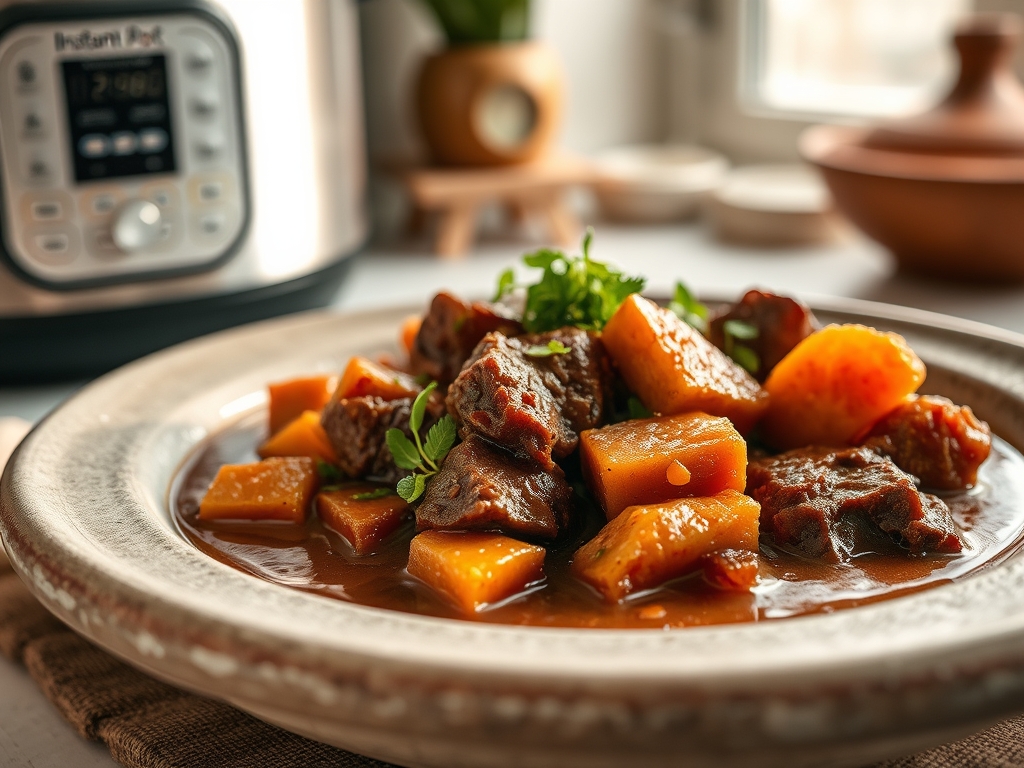
Look at the Masterclass photo above. Notice the "Glistening Surface." If your stew looks dull or matte, you lack fat emulsification. Fix: Whisk in a tablespoon of cold butter at the very end to create a "monte au beurre" finish. If your potatoes look jagged or disintegrated, you used the wrong cultivar. Fix: Always use waxy potatoes like Yukon Gold or Red Bliss; avoid Russets as they collapse into starch. If the color is pale, your tomato paste didn't cook long enough. Fix: Next time, fry the paste until it smells like roasted tomatoes before adding liquid.
THE DEEP DIVE
Macro Nutrition Profile:
A standard serving contains approximately 450 calories. You are looking at 35g of Protein, 18g of Fat, and 28g of Carbohydrates. The high collagen content from the chuck roast provides significant amino acids like glycine and proline, essential for joint health.
Dietary Swaps:
- Vegan: Swap beef for "Lion's Mane" mushrooms or extra-firm tofu and use vegetable umami broth with a splash of soy sauce.
- Keto: Eliminate the potatoes and cornstarch. Replace with cauliflower florets (added after the pressure cycle) and thicken with a pinch of Xanthan gum.
- GF: Ensure your Worcestershire sauce is certified gluten-free and use arrowroot powder instead of cornstarch.
Meal Prep & Reheating Science:
Beef stew is molecularly superior on day two. As it cools, the aromatics continue to infuse the fats. When reheating, do not use a microwave; it creates "hot spots" that toughen the beef. Use a heavy-bottomed pot over low heat to gently aerate and liquefy the gelatinous gravy without overcooking the vegetables.
THE KITCHEN TABLE
Why is my beef still tough after 35 minutes?
You likely used "stew meat" from an unknown cut. If it is tough, lock the lid and add 10 more minutes. High-connective tissue cuts like chuck need time to transform collagen into gelatin.
Can I use frozen beef?
Yes, but the Maillard reaction will fail. Thaw it first for maximum flavor. If you must go from frozen, increase the pressure time to 60 minutes and expect a milder flavor profile.
Do I have to use wine?
No. You can substitute with extra beef broth and a tablespoon of balsamic vinegar. The acidity is crucial to balance the heavy fats and "brighten" the overall palate of the dish.
My stew is too salty! How do I fix it?
Add a splash of water or more unsalted broth. Alternatively, add a few more potato chunks and simmer; they act as sponges for excess sodium. Balance the salt with a teaspoon of sugar or honey.