Listen to the sound of a kitchen operating at peak efficiency. It is not just the clatter of pans; it is the rhythmic hiss of moisture escaping a searing surface and the low hum of a slow cooker transforming tough connective tissue into silk. We are here to dismantle the pedestrian reputation of Slow Cooker Beef Stroganoff and rebuild it into a masterpiece of dairy acid equilibrium. This is not a dump and go operation. It is a technical audit of flavor extraction and emulsion stability. Imagine beef chuck, marbled with intramuscular fat, undergoing a long, low thermal bath until the collagen collapses into gelatin. Now, envision that richness balanced by the piquant bite of high quality sour cream and the earthy, umami depth of cremini mushrooms. We are targeting a sauce that is viscous enough to coat a spoon but light enough to dance on the palate. If you are looking for a bland, grey stew, you have come to the wrong station. We are here to achieve a deep mahogany sear and a velvet finish that would make a French saucier weep with envy.
THE DATA MATRIX
| Metric | Specification |
|---|---|
| Prep Time | 30 Minutes |
| Execution Time | 6 to 8 Hours (Low) / 4 Hours (High) |
| Yield | 6 Servings |
| Complexity (1-10) | 4 |
| Estimated Cost per Serving | $4.50 – $6.00 |
THE GATHERS
Ingredient Protocol:
- 900g / 2 lbs Beef Chuck Roast, cubed into 1-inch pieces.
- 450g / 1 lb Cremini Mushrooms, sliced thick.
- 2 medium Yellow Onions, finely diced.
- 4 cloves Garlic, minced.
- 30ml / 2 tbsp Tomato Paste.
- 15ml / 1 tbsp Worcestershire Sauce.
- 10g / 2 tsp Smoked Paprika.
- 500ml / 2 cups Beef Bone Broth (low sodium).
- 240ml / 1 cup Sour Cream (full fat).
- 30g / 1/4 cup All-Purpose Flour.
- 60g / 4 tbsp Unsalted Butter.
- 15ml / 1 tbsp Neutral Oil (Avocado or Grapeseed).
- Fresh Dill and Parsley for garnish.
Section A: Ingredient Quality Audit:
If your beef looks pale or wet, it has been pumped with saline. Pat it dry with surgical precision or the Maillard reaction will fail, leaving you with boiled meat. If your mushrooms are slimy, they are past their prime; swap them for dried porcini rehydrated in the broth to inject a concentrated umami punch. Using low fat sour cream is a tactical error. The lack of fat globules will cause the sauce to "break" or curdle when it hits the heat. If you only have low fat options, whisk in a teaspoon of cornstarch to provide a molecular buffer against heat-induced protein clumping.
THE MASTERCLASS
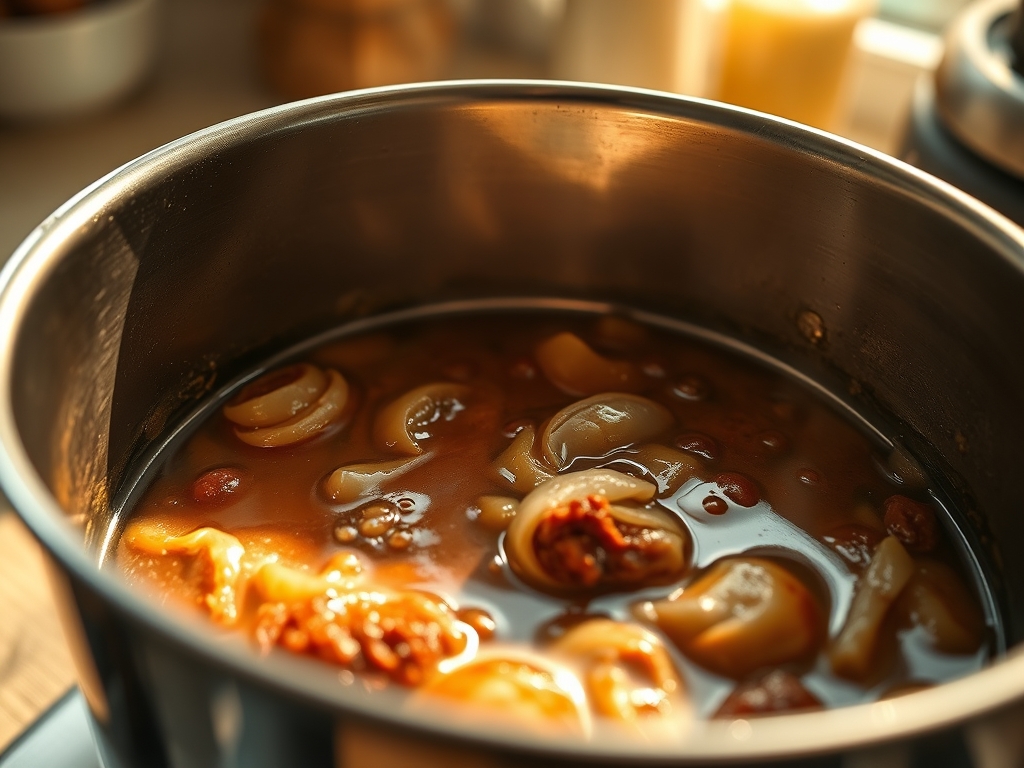
Step 1: The Maillard Initiation
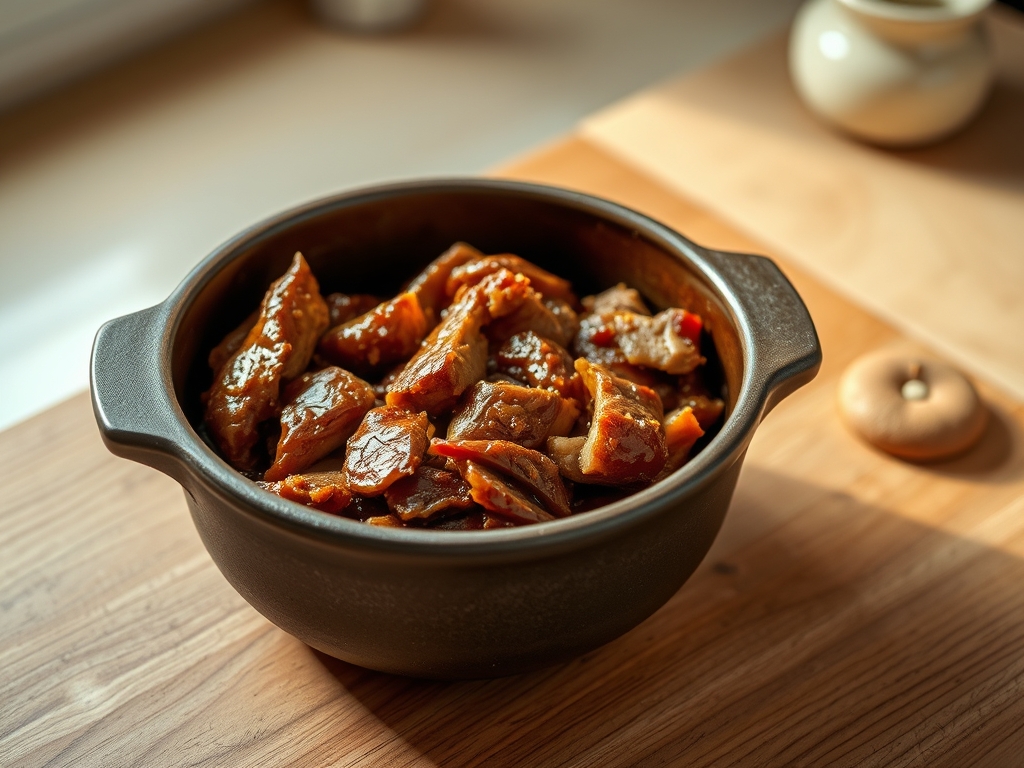
Season the beef aggressively with kosher salt. Heat your oil in a heavy bottomed stainless steel skillet until it reaches the smoke point. Sear the beef in batches. Do not crowd the pan; crowding drops the surface temperature and induces steaming. Use a bench scraper to clear any stubborn bits between batches.
Pro Tip: The Maillard reaction occurs between 140 and 165 degrees Celsius. This chemical reaction between amino acids and reducing sugars creates the complex flavor compounds essential for a deep, savory profile. Without this step, your Slow Cooker Beef Stroganoff will lack structural depth.
Step 2: Deglaze and Aromatics
Remove the meat and add the butter to the skillet. Toss in the onions and mushrooms. Sauté until the onions are translucent and the mushrooms have released their moisture and begun to brown. Stir in the garlic, tomato paste, and paprika for 60 seconds until fragrant. Pour in a splash of the beef broth to deglaze the pan, scraping up the fond (the brown bits) with a wooden spatula.
Pro Tip: Deglazing is a solvent-based extraction. The alcohol or water-based liquid dissolves the caramelized proteins stuck to the pan, integrating them back into the sauce. Use a digital scale to ensure your spice ratios are exact for consistent flavor scaling.
Step 3: The Thermal Bath
Transfer the beef and the aromatic mixture into the slow cooker. Add the remaining broth and Worcestershire sauce. Set the device to "Low" for 7 to 8 hours. This duration allows the tough Type I collagen in the chuck roast to denature into gelatin, providing a natural thickness and a melt in your mouth texture.
Pro Tip: Slow cooking is a game of thermodynamics. Maintaining a consistent internal temperature of roughly 88 degrees Celsius (190 degrees Fahrenheit) is the "sweet spot" for breaking down connective tissue without drying out the muscle fibers.
Step 4: The Emulsion Phase
Thirty minutes before serving, whisk the flour into the sour cream in a separate saucier or bowl until smooth. Temper this mixture by adding a ladle of the hot liquid from the slow cooker, then stir the tempered cream back into the main pot. Cover and cook for the final 30 minutes to thicken.
Pro Tip: Tempering prevents thermal shock. By gradually raising the temperature of the sour cream, you prevent the proteins from denaturing too rapidly, which would result in a grainy, unappealing texture.
Section B: Prep & Timing Fault-Lines:
The most common failure is the "High" setting trap. While it saves time, the rapid boil can toughen the beef before the collagen has a chance to melt. If you are behind schedule, cut the beef into smaller half-inch cubes to increase the surface area to volume ratio, accelerating the tenderization process. Always use a timer; overcooking past 10 hours will turn the beef into mushy threads, destroying the textural integrity of the dish.
THE VISUAL SPECTRUM
Section C: Thermal & Visual Troubleshooting:
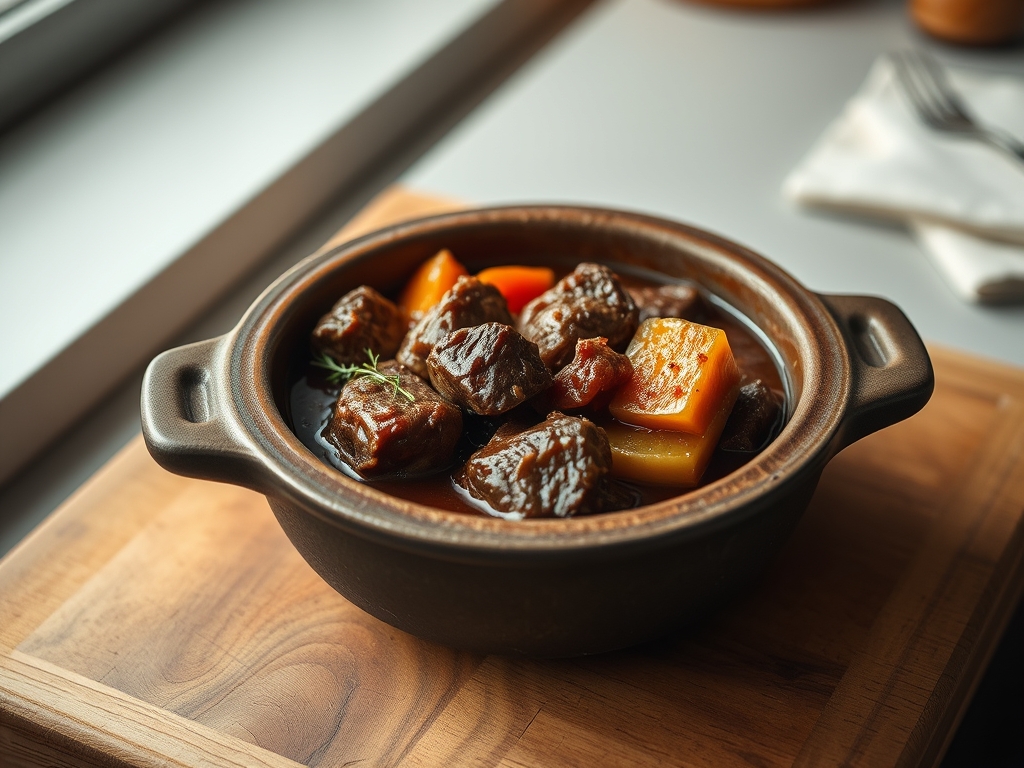
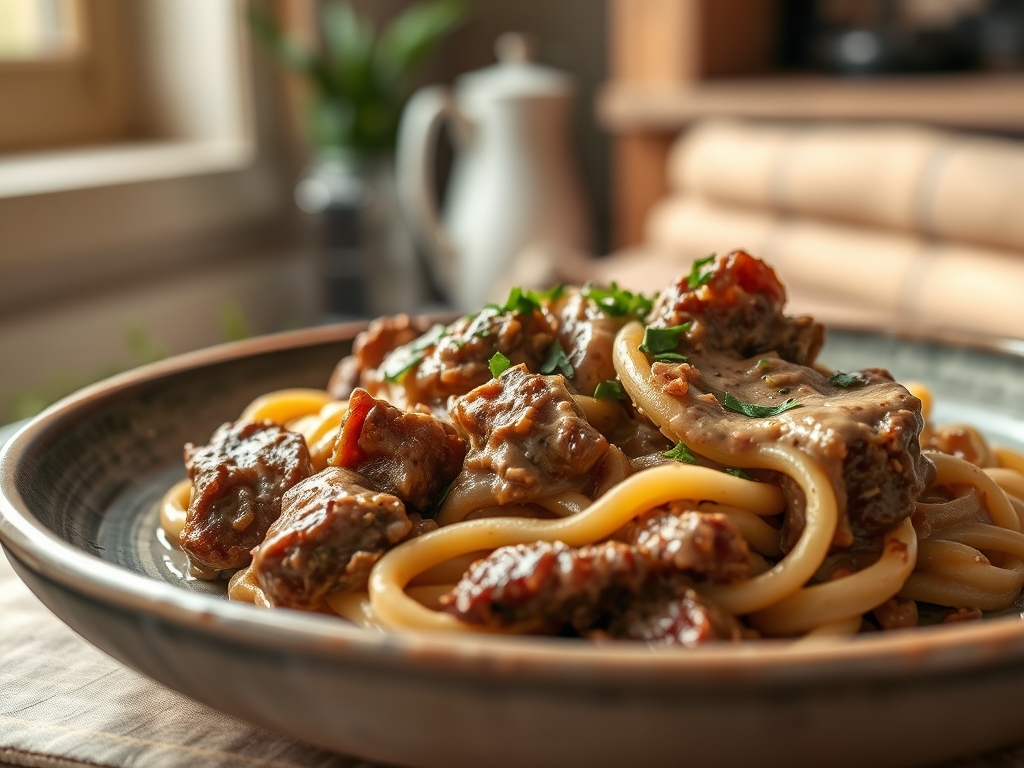
Look at the Masterclass photo. Notice the deep, mahogany hue of the beef and the rich, golden-tan color of the sauce. If your dish looks grey, you skipped the sear or used too much liquid. If the sauce is thin, your flour-to-liquid ratio was off; fix this by whisking a slurry of equal parts cornstarch and cold water and stirring it in for five minutes on high. Dull colors can be revived with a splash of lemon juice or apple cider vinegar right before serving. The acid acts as a "brightener," cutting through the heavy fats and making the colors and flavors pop.
THE DEEP DIVE
Macro Nutrition Profile:
A standard serving (approx. 350g) delivers roughly 450 calories. You are looking at 35g of Protein, 28g of Fat, and 12g of Carbohydrates. The high protein content is balanced by the fat-soluble vitamins found in the mushrooms and onions.
Dietary Swaps:
- Keto: Eliminate the flour and use xanthan gum (start with 1/4 teaspoon) as a thickener. Serve over roasted cauliflower or zucchini noodles.
- Vegan: Replace beef with a mix of King Oyster and Portobello mushrooms. Use cashew cream and nutritional yeast for the dairy component.
- GF: Use a 1:1 gluten-free flour blend or a cornstarch slurry for thickening. Ensure your Worcestershire sauce is certified gluten-free.
Meal Prep & Reheating Science:
Slow Cooker Beef Stroganoff is a prime candidate for meal prep. As it sits, the flavors continue to infuse through molecular diffusion. However, reheating requires care. Do not microwave on high power. The intense radiation will cause the dairy emulsion to break. Reheat gently on the stovetop over low heat, adding a tablespoon of broth or water to re-hydrate the starch molecules and restore the original viscosity.
THE KITCHEN TABLE
Why is my beef tough after 8 hours?
You likely used a lean cut like eye round. Lean cuts lack the collagen necessary for slow cooking. Stick to chuck roast or brisket for the best results.
Can I add the sour cream at the beginning?
Negative. Long-term exposure to high heat will cause the dairy to curdle and separate. Always introduce the cream during the final phase of the cook.
What is the best pasta for this?
Wide egg noodles are the gold standard. Their broad surface area and porous texture are designed to grip the viscous sauce, ensuring a perfect ratio in every bite.
Can I freeze this dish?
Yes, but the texture of the sour cream may change slightly upon thawing. To fix this, whisk in a fresh tablespoon of sour cream during the reheating process to restore the creamy mouthfeel.