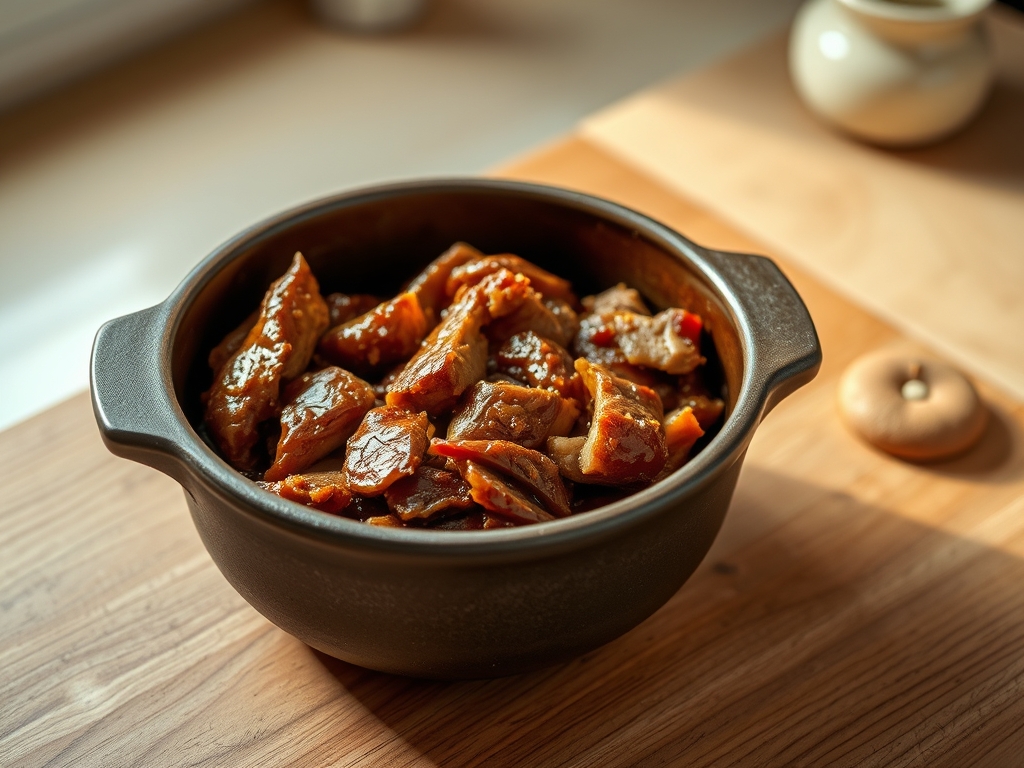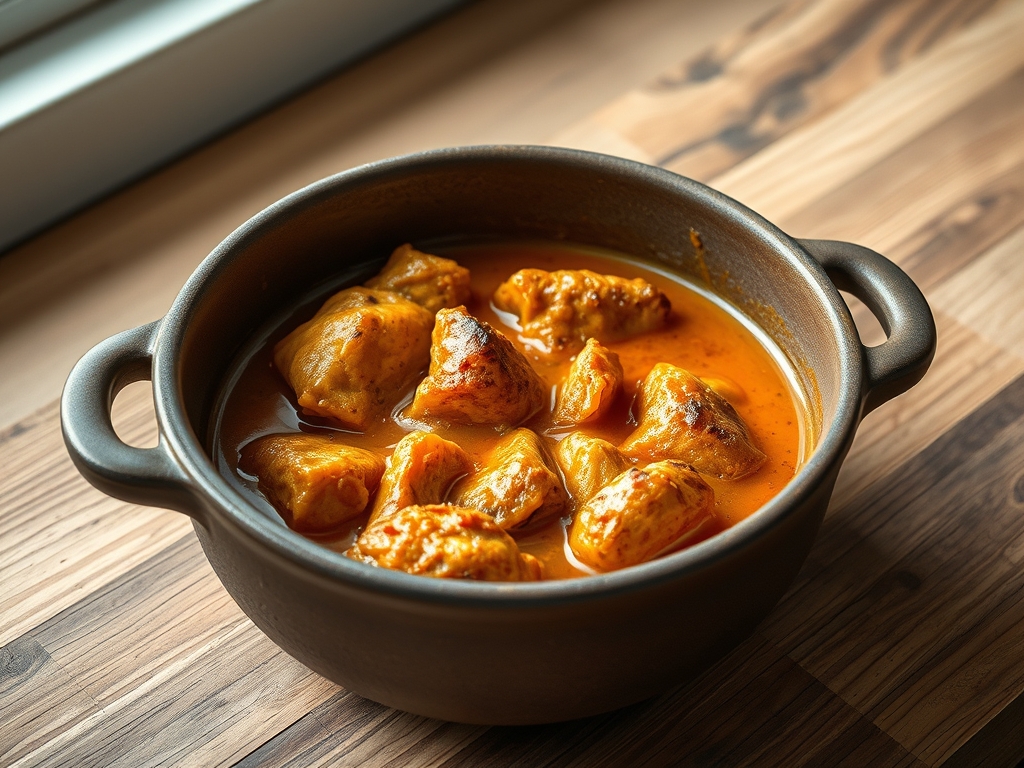
Listen up, kitchen architects. We are not just making dinner; we are conducting a high-stakes structural overhaul of bovine connective tissue. If you have ever been served a bowl of gray, rubbery disappointment, you have witnessed a failure of culinary engineering. The goal here is the ultimate Slow Cooker Beef Stew. We are looking for a masterpiece where the collagen has undergone a complete molecular transition into gelatin, creating a sauce so viscous it clings to the back of a silver spoon like liquid velvet. This is about the strategic application of low-intensity thermal energy over an eight hour window. We are transforming tough, hardworking muscle fibers into succulent morsels that surrender at the mere suggestion of a fork. Forget the "set it and forget it" propaganda. We are setting it with intention and monitoring the variables with the precision of a laboratory technician. Prepare your palate for a deep dive into the Maillard reaction and the glorious, sticky reality of long-form braising.
THE DATA MATRIX
| Metric | Specification |
|---|---|
| Prep Time | 45 Minutes |
| Execution Time | 8 Hours (Low) or 4 Hours (High) |
| Yield | 6 Standard Servings |
| Complexity (1-10) | 4 (Technical browning required) |
| Estimated Cost per Serving | $4.50 – $6.00 USD |
THE GATHERS
Ingredient Protocol:
- 1.4 kg / 3 lbs Beef Chuck Roast, cubed into 4cm pieces.
- 45 ml / 3 tbsp Neutral Oil (Grapeseed or Avocado).
- 30 g / 2 tbsp Unsalted Butter.
- 2 large Yellow Onions, medium dice.
- 450 g / 1 lb Carrots, peeled and cut into thick rounds.
- 700 g / 1.5 lbs Yukon Gold Potatoes, quartered.
- 4 cloves Garlic, smashed and minced.
- 30 g / 2 tbsp Tomato Paste.
- 500 ml / 2 cups Dry Red Wine (Cabernet or Merlot).
- 750 ml / 3 cups Beef Bone Broth (High gelatin content).
- 15 ml / 1 tbsp Worcestershire Sauce.
- 2 Bay Leaves.
- 5 g / 1 tsp Dried Thyme.
- 30 g / 1/4 cup All-Purpose Flour.
- Fine Sea Salt and Freshly Cracked Black Pepper to taste.
Section A: Ingredient Quality Audit:
The most common failure point in a Slow Cooker Beef Stew is the "stew meat" trap. Pre-cut stew meat is often a conglomerate of various muscle groups with different metabolic rates. Instead, purchase a whole Chuck Roast and use a sharp chef knife to break it down yourself. This ensures uniform fat distribution. If your vegetables are turning to mush, you are likely using starchy Russet potatoes. Switch to Yukon Golds or Red Bliss; their waxy cell structure holds firm during the eight hour thermal assault. If your broth tastes thin, it lacks the necessary protein density. Fix this by whisking in a teaspoon of unflavored gelatin or using a high-quality bone broth instead of standard shelf-stable stock.
THE MASTERCLASS
Step 1: The Maillard Initiation
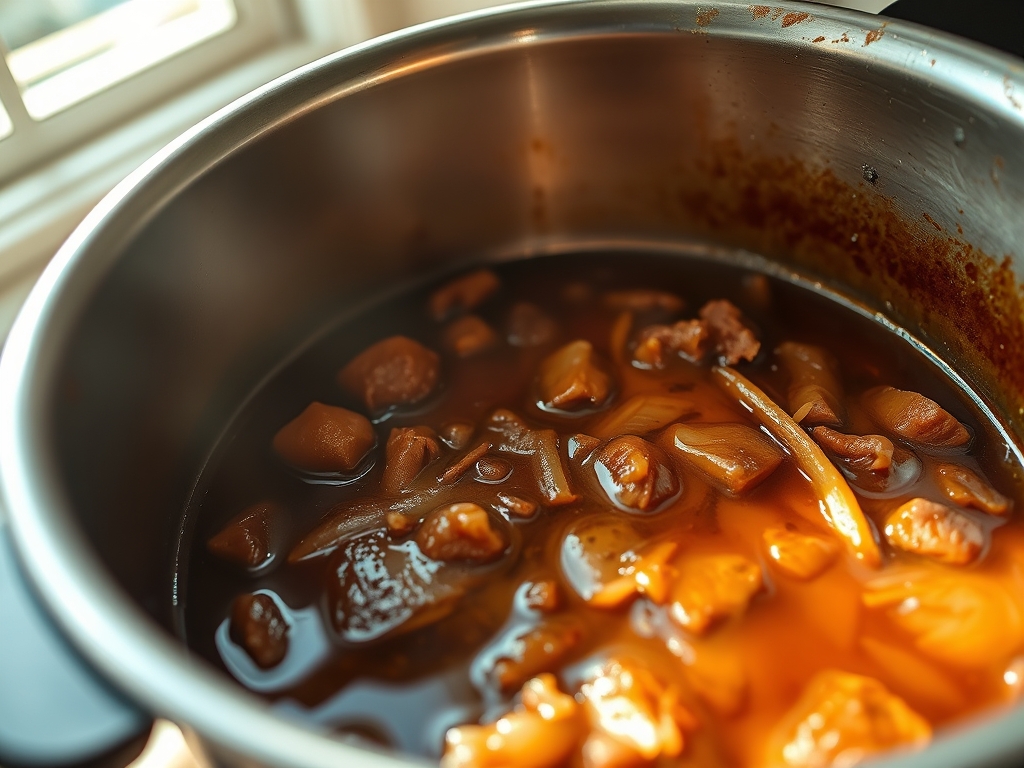
Pat your beef cubes bone-dry with paper towels. Season aggressively with salt and pepper. Heat your oil in a heavy-bottomed saucier or cast iron skillet until it reaches the shimmering point. Brown the beef in batches, ensuring each piece has enough "airspace" to sear rather than steam.
Pro Tip: This step is non-negotiable for flavor. The Maillard reaction creates hundreds of different flavor compounds that a slow cooker cannot replicate on its own. Use a digital scale to ensure your batches are equal in weight for consistent heat retention in the pan.
Step 2: Aromatics and Deglazing
Remove the beef and add butter to the pan. Sauté onions and carrots until the onions are translucent. Stir in the tomato paste and garlic, cooking for two minutes until the paste turns a deep rust color. Pour in the red wine and use a bench scraper or wooden spoon to scrape up the "fond" (the brown bits) from the bottom.
Pro Tip: Deglazing captures the concentrated proteins stuck to the pan. This infuses the liquid base with deep, umami complexity that defines a professional-grade sauce.
Step 3: The Slow Cooker Integration
Transfer the seared beef, the sautéed vegetables, and the wine reduction into the slow cooker ceramic insert. Add the potatoes, bay leaves, thyme, and Worcestershire sauce. Pour the beef broth over the top until the ingredients are just submerged.
Pro Tip: Do not overfill. A slow cooker relies on a specific amount of headspace to create the steam cycle necessary for even cooking. Use your digital scale to measure the broth precisely to avoid a watery finish.
Step 4: The Eight Hour Transition
Set the device to "Low" for 8 hours. Resist the urge to lift the lid. Every time you open the cooker, you lose significant thermal energy and extend the cooking time by twenty minutes.
Pro Tip: The collagen in the chuck roast begins to melt at approximately 160 degrees Fahrenheit (71 Celsius). A slow, steady climb to this temperature ensures the muscle fibers remain tender while the connective tissue turns into a viscous glaze.
Step 5: The Final Emulsification
In the final thirty minutes, whisk the flour with a small amount of cold water to create a slurry. Stir this into the stew. This will aerate and thicken the liquid, binding the fats and juices into a cohesive sauce.
Pro Tip: If the sauce is too thin, temper in a knob of cold butter at the very end. This technique, known as monter au beurre, adds a glossy sheen and a rich mouthfeel that mimics high-end restaurant reductions.
Section B: Prep & Timing Fault-Lines:
If you find yourself behind schedule, do not simply crank the heat to "High" and hope for the best. While "High" reaches the same temperature as "Low," it does so too rapidly, which can cause the muscle fibers to seize and toughen before the collagen has a chance to render. If your timing is off, it is better to finish the dish in a 300 degree Fahrenheit oven in a covered Dutch oven. This provides more consistent peripheral heat than the bottom-heavy heating element of a standard slow cooker.
THE VISUAL SPECTRUM
Section C: Thermal & Visual Troubleshooting:
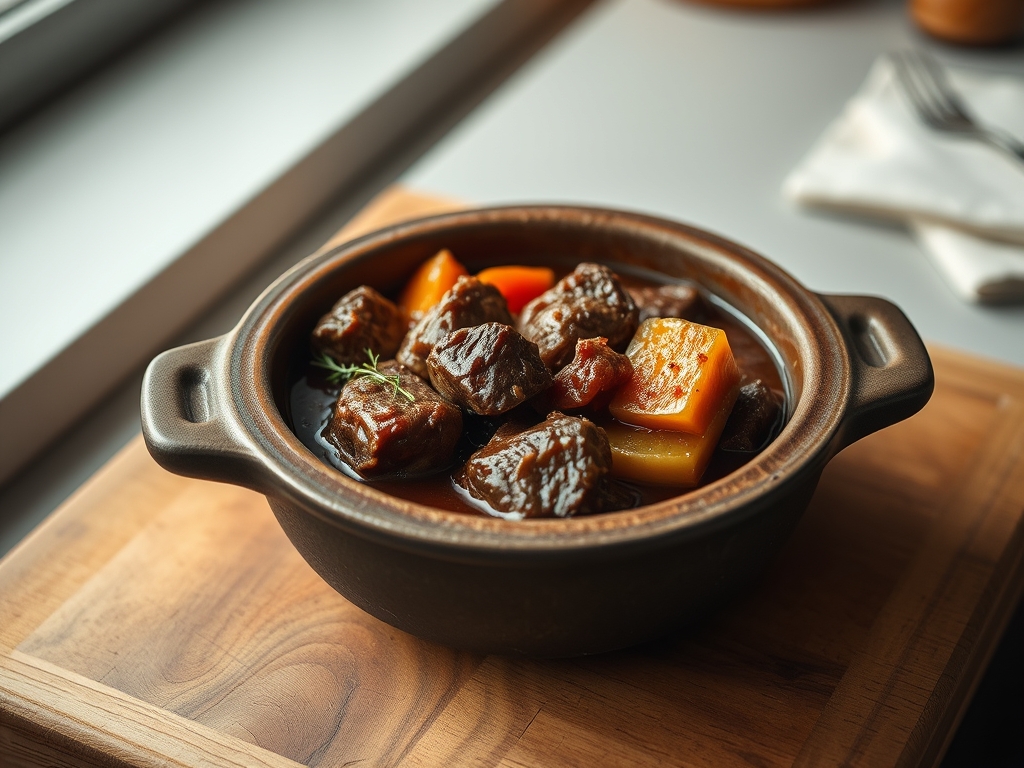
Referencing the Masterclass photo above, notice the deep mahogany hue of the broth. If your stew looks pale or "milky," you likely skipped the tomato paste caramelization or failed to sear the beef sufficiently. The vegetables should have distinct edges; if they look rounded or fuzzy, they have been overcooked or cut too small. A perfect Slow Cooker Beef Stew should show a clear separation of textures: the glisten of the rendered fat, the matte surface of the beef, and the vibrant, softened orange of the carrots. If the surface has a thick layer of oil, use a wide spoon to skim the excess "fat cap" before serving to maintain a clean, piquant flavor profile.
THE DEEP DIVE
Macro Nutrition Profile:
A standard 400g serving provides approximately 450 calories, 35g of protein, 22g of carbohydrates, and 24g of fat. The high gelatin content from the broken-down collagen provides essential amino acids like glycine and proline, which are excellent for gut health and joint integrity.
Dietary Swaps:
- Vegan: Replace beef with hearty Portobello mushrooms and use a "no-beef" vegetable base. Increase the tomato paste for depth.
- Keto: Omit the potatoes and flour slurry. Replace with cauliflower florets added in the last 90 minutes and thicken with a pinch of xanthan gum.
- Gluten-Free: Swap the all-purpose flour for cornstarch or arrowroot powder. Ensure your Worcestershire sauce is a certified GF brand.
Meal Prep & Reheating Science:
This stew is actually superior on day two. As the mixture cools, the gelatin sets, trapping flavor molecules. When reheating, do so gently on the stovetop over low heat. Avoid the microwave, as it can "hot spot" the beef, causing the proteins to tighten and become "rubbery." Adding a splash of water or broth during reheating helps to re-emulsify the sauce.
THE KITCHEN TABLE
Why is my beef still tough after 8 hours?
You likely used a lean cut like Round or Sirloin. These lack the internal fat and collagen necessary for long-term breakdown. Stick to Chuck Roast for the best results in a Slow Cooker Beef Stew.
Can I put frozen beef directly into the slow cooker?
Absolutely not. This creates a "danger zone" temperature window where bacteria can flourish before the meat reaches a safe internal temperature. Always thaw your proteins completely before beginning the sear.
Do I really need to brown the meat first?
Technically, no, but ethically, yes. Searing develops the complex flavors that define the dish. Without it, you are essentially boiling beef, which results in a flat, one-dimensional flavor profile and unappealing texture.
Why did my potatoes turn into mush?
You likely used starchy potatoes or cut them too small. Use waxy varieties like Yukon Gold and keep the pieces large, at least 3-4cm. This ensures they survive the long-term thermal exposure.