The culinary world is a battlefield of textures; however, nothing is more humiliating for a professional than the jagged, cratered surface of a poorly peeled egg. We are moving beyond the archaic pot of boiling water and the superstitious addition of vinegar or salt. We are entering the realm of atmospheric pressure and thermal shock. The Instant Pot Hard Boiled Eggs protocol is not just a recipe; it is a mechanical intervention in the life cycle of albumin. When you subject a shell to five minutes of high-pressure steam, you are not merely cooking; you are forcing moisture into the microscopic pores of the calcium carbonate shell. This creates a pressurized steam jacket that physically detaches the delicate membrane from the white. The result is a smooth, aerodynamic sphere that slides out of its housing with zero resistance. Forget the frustration of picking away at shell fragments like a forensic archaeologist. We are here for high-yield, high-velocity precision that delivers a creamy, golden yolk every single time without the dreaded sulfurous green ring of shame.
THE DATA MATRIX
| Metric | Specification |
|---|---|
| Prep Time | 2 Minutes |
| Execution Time | 15 Minutes (Total) |
| Yield | 12 Units |
| Complexity (1-10) | 2 |
| Estimated Cost per Serving | $0.25 |
THE GATHERS
Ingredient Protocol:
- 12 Large Grade A Eggs (Cold from the refrigerator)
- 250ml / 1 cup Filtered Water
- 1.5kg / 3 lbs Ice Cubes (For the thermal shock bath)
- 1000ml / 4 cups Cold Tap Water (For the thermal shock bath)
Section A: Ingredient Quality Audit:
The primary failure point in this protocol is the age of the raw material. While older eggs are traditionally easier to peel due to a higher pH level that weakens the membrane bond, the 5 5 5 Pressure Protocol renders this variable obsolete. If your eggs are farm-fresh and the shells are particularly thick, the membrane may still cling. The fix: Increase your high-pressure interval by 60 seconds to ensure the viscous interior expands sufficiently against the shell. If you notice a thin, watery white upon cracking, your eggs are past their prime; the protein strands have begun to denature. In this case, decrease the pressure time to 4 minutes to avoid a rubbery texture. Always use a digital scale to verify the weight of your eggs if you are aiming for Michelin-level consistency; a "Large" egg should fluctuate between 50g and 60g.
THE MASTERCLASS
1. The Steam Chamber Configuration
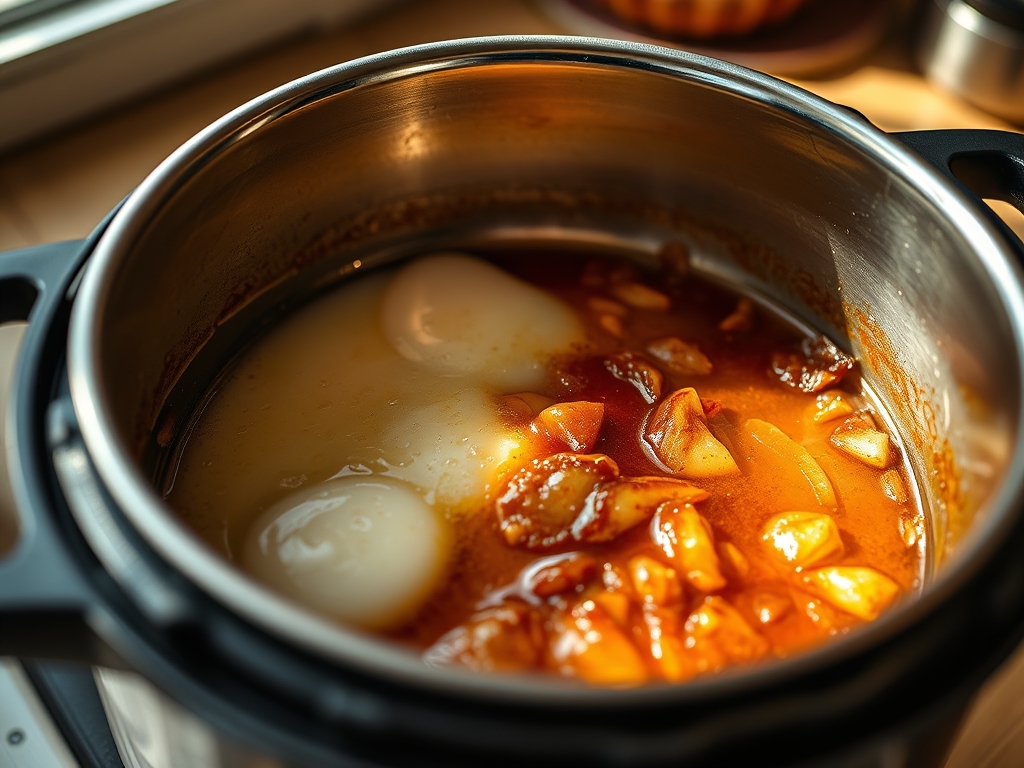
Place the stainless steel wire rack or a specialized silicone egg sling into the inner pot of your pressure cooker. Pour in exactly 250ml of filtered water. Carefully arrange the eggs on the rack, ensuring they are not touching the bottom of the pot directly to avoid localized hot spots.
Pro Tip: Use a digital scale to measure your water rather than a volume cup for 100% accuracy. The science here involves the latent heat of vaporization; the water must transform entirely into steam to create the uniform pressure environment needed to infuse the shell with moisture.
2. The High Pressure Interval
Secure the lid and set the steam vent to the sealing position. Program the unit for 5 minutes at High Pressure. The unit will take several minutes to reach the required atmospheric density before the countdown begins.
Pro Tip: During this phase, the heat causes the air cell at the base of the egg to expand rapidly. If you use a bench scraper to gently tap the fat end of the egg before loading, you can sometimes "prime" the air cell, though with pressure cooking, the steam usually does the heavy lifting for you.
3. The Controlled Depressurization
Once the timer signals completion, do not touch the vent. Allow the unit to sit undisturbed for exactly 5 minutes of Natural Pressure Release (NPR). This allows the internal temperature of the yolk to stabilize without the violent agitation of a quick release.
Pro Tip: Rapidly venting the steam can cause the internal pressure of the egg to exceed the external pressure too quickly, leading to cracked shells or "blown" whites. Patience here ensures the proteins render into a tender, non-rubbery state.
4. The Cryogenic Shock
After the 5-minute wait, manually release any remaining steam. Immediately transfer the eggs into a large saucier or bowl filled with an ice-water slurry. Let them submerge for a final 5 minutes.
Pro Tip: This is the most critical step. The ice bath causes the egg to shrink away from the shell instantly. This thermal contraction creates the "easy peel" effect. Use a thermometer to ensure your ice bath remains below 4 degrees Celsius for maximum efficiency.
Section B: Prep & Timing Fault-Lines:
The most common human error is the "Ghost Heat" factor. If you leave the eggs in the pot after the 5-minute natural release, the residual heat in the stainless steel liner will continue to cook the yolks. This leads to the "Green Ring Syndrome," where hydrogen sulfide reacts with iron in the yolk. If your timing is off, immediately flush the inner pot with cold water to halt the kinetic energy. Another fault-line is the altitude adjustment; if you are cooking at high elevations, you must increase your pressure time by 5% for every 1000 feet above sea level to achieve the same molecular density.
THE VISUAL SPECTRUM
Section C: Thermal & Visual Troubleshooting:
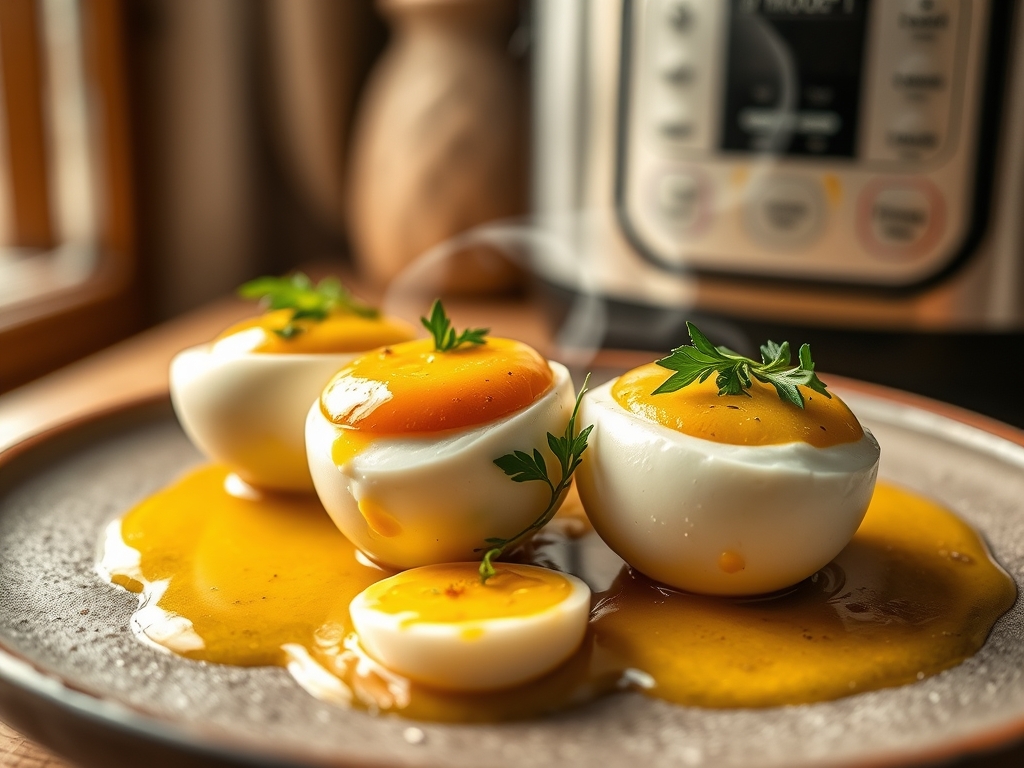
Referencing the Masterclass photo, the ideal Instant Pot Hard Boiled Eggs should exhibit a pristine, matte white exterior with no pitting. If your eggs look "dimpled," you likely skipped the ice bath or used eggs that were too fresh without adjusting the time. If the yolk is centered, your rotation during storage was correct; if the yolk is touching the side, the egg was stored on its side for too long, allowing the chalaza to weaken. For a piquant presentation, the yolk should be a solid, vibrant marigold color. If the yolk looks pale or powdery, you have over-cooked the proteins. If the white has a translucent, jelly-like appearance, the pressure was insufficient to fully aerate and set the albumin.
THE DEEP DIVE
Macro Nutrition Profile:
A single large egg provides approximately 78 calories, 6 grams of high-biological-value protein, and 5 grams of lipids. It is a nutrient-dense powerhouse containing choline, lutein, and zeaxanthin.
Dietary Swaps:
While there is no direct vegan "egg" that can be hard-boiled in a shell, those on Keto or GF diets find this protocol to be a foundational pillar. For a vegan alternative in salads, one might infuse extra-firm tofu with black salt (Kala Namak) to mimic the sulfurous profile, though the structural integrity will differ.
Meal Prep & Reheating Science:
To maintain the molecular structure during storage, keep the eggs in their shells in a sealed container for up to seven days. To reheat, never use a microwave, as it will excite the water molecules inside the yolk and cause a steam explosion. Instead, submerge the peeled egg in hot (not boiling) water for 2 minutes to gently wake the fats without toughening the proteins.
THE KITCHEN TABLE
Why is there a green ring around my yolk?
This is a chemical reaction between iron and sulfur caused by overcooking. The 5 5 5 method prevents this by using a precise timer and an immediate ice bath to halt the thermal carryover.
Can I cook more than 12 eggs at once?
Yes. The beauty of pressure cooking is that the volume of food does not significantly change the cook time, provided the steam can circulate. You can stack up to two dozen eggs in a standard 6-quart unit.
Do I need to use distilled water?
No. Tap water is sufficient for the steam cycle. However, using filtered water prevents mineral scale buildup on your Instant Pot heating element over time, ensuring long-term mechanical reliability.
Why did my eggs crack during the cycle?
Cracking usually occurs if the eggs were added to the pot with existing micro-fractures in the shell. Always inspect your eggs for structural integrity before beginning the protocol to ensure a clean, professional result.