Imagine a world where your cheese sauce is a silken, molten river of gold rather than a gritty, weeping mess of separated lipids and coagulated proteins. We have all seen it; that tragic moment when a high-end cheddar hits a pan that is too hot and instantly curdles into something resembling wet sand. This is the ultimate failure of Dairy Stability in Cookers. To master the art of the emulsion, you must think like an engineer and act like a chemist. We are not just making dinner; we are managing a complex suspension of fat droplets within a water-based matrix. When the thermal load exceeds the capacity of your emulsifiers, the system collapses. Your mission is to maintain structural integrity under fire. By understanding how proteins like casein interact with heat and moisture, you can transform a simple roux into a viscous masterpiece that clings to a spoon with piquant authority. It is time to audit your technique, stabilize your infrastructure, and ensure that every gram of dairy you deploy achieves its maximum potential without a single drop of breakage.
THE DATA MATRIX
| Metric | Specification |
|---|---|
| Prep Time | 10 Minutes |
| Execution Time | 15 Minutes |
| Yield | 1 Liter / 4 Cups |
| Complexity (1-10) | 4 |
| Estimated Cost per Serving | $1.25 |
THE GATHERS
Ingredient Protocol:
- 50g / 3.5 tbsp Unsalted Butter (82% Butterfat)
- 50g / 6 tbsp All-Purpose Flour
- 750ml / 3 cups Whole Milk (Room Temperature)
- 300g / 3 cups Sharp Cheddar (Hand-grated)
- 5ml / 1 tsp Sodium Citrate (Optional Stabilizer)
- 2g / 0.5 tsp Cayenne Pepper
- 10g / 2 tsp Kosher Salt
Section A: Ingredient Quality Audit:
The primary culprit in sauce failure is pre-shredded cheese. These commercial bags are coated in potato starch or cellulose to prevent clumping in the package; however, these anti-caking agents interfere with the infuse process and create a grainy mouthfeel. If your sauce feels gritty, your raw materials are likely compromised. To fix this, always grate your cheese from a high-quality block. If you are stuck with low-moisture cheese that refuses to melt, the addition of a small amount of sodium citrate acts as a powerful sequestrant, preventing the calcium from tightening the protein network too aggressively. This ensures a smooth, liquid-gold result every time.
THE MASTERCLASS
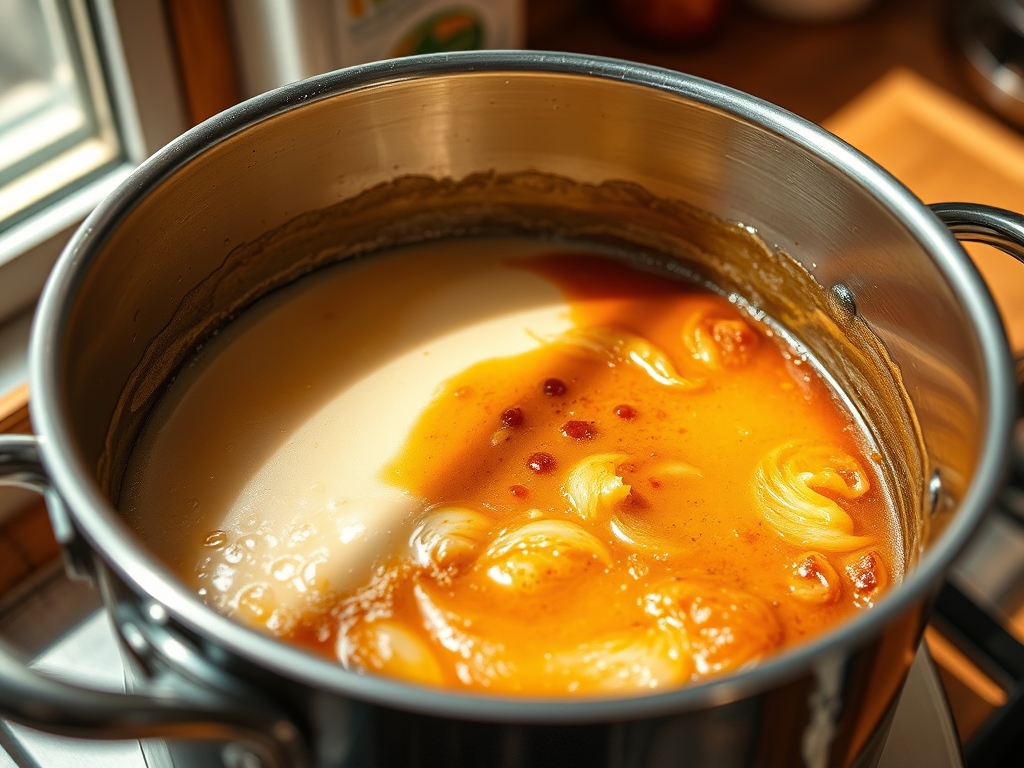
Step 1: The Roux Foundation
Place your heavy-bottomed saucier over medium-low heat and render the butter until the foaming subsides. Whisk in the flour steadily. You are looking for a blond roux that smells slightly nutty but has not yet begun to brown.
Pro Tip: Use a digital scale to ensure a perfect 1:1 ratio of fat to flour. This precise balance is the scaffolding of your emulsion; too much fat leads to a greasy finish, while too much flour creates a pasty, dull texture.
Step 2: The Tempering Phase
Slowly stream in the milk while whisking vigorously to aerate the mixture. Do not dump the liquid in all at once. Start with a quarter of the volume, whisking until a thick paste forms, then gradually thin it out.
Pro Tip: Use a silicone-coated whisk to reach the corners of your pan. Proper Dairy Stability in Cookers relies on constant kinetic energy to prevent the milk proteins from scorching on the bottom of the vessel.
Step 3: The Thickening Point
Bring the mixture to a gentle simmer. You will notice the sauce become viscous as the starch granules swell and burst, a process known as gelatinization. Maintain this heat for two minutes to cook out the raw flour taste.
Pro Tip: Check the consistency with a bench scraper or the back of a spoon. It should coat the surface evenly without breaking. If it is too thick, a splash of warm milk will recalibrate the density.
Step 4: The Cheese Integration
Remove the pan from the heat entirely. This is the "kill zone" for emulsions. Sprinkle the hand-grated cheese in small handfuls, whisking until each batch is fully incorporated before adding the next.
Pro Tip: Residual heat is your best friend. By taking the pan off the burner, you prevent the cheese proteins from tightening and squeezing out the fat, which is the leading cause of "the break."
Section B: Prep & Timing Fault-Lines:
Timing is the invisible ingredient. If you add cold milk to a scorching hot roux, you risk thermal shock, which creates lumps that no amount of whisking can fix. Conversely, if you add the cheese while the sauce is still boiling, the high heat will cause the proteins to clump into rubbery strands. Always ensure your milk is at least room temperature and your cheese is added off-heat. If the sauce begins to separate, a tablespoon of boiling water and a vigorous whisking session can sometimes re-emulsify the fats, but prevention is always more efficient than a post-mortem rescue.
THE VISUAL SPECTRUM
Section C: Thermal & Visual Troubleshooting:
Look closely at the Masterclass photo above. Notice the glossy, reflective surface and the way the sauce drapes over the spoon without dripping like water. If your sauce looks dull or matte, you have likely overcooked the starch or under-hydrated the proteins. If you see tiny orange droplets on the surface, the fat has escaped the emulsion. To fix a dull appearance, whisk in a cold pat of butter at the very end to deglaze the flavor profile and add a professional sheen. If the color is pale, a pinch of smoked paprika or turmeric can enhance the visual "warmth" without altering the primary flavor of the cheddar.
THE DEEP DIVE
Macro Nutrition Profile
A standard 100ml serving contains approximately 220 calories, 16g of fat, 12g of carbohydrates, and 9g of protein. While it is calorie-dense, the high protein content from the cheese provides significant satiety.
Dietary Swaps
- Vegan: Replace butter with refined coconut oil and milk with unsweetened cashew milk. Use nutritional yeast and lactic acid for that piquant cheesy tang.
- Keto: Eliminate the flour roux. Instead, use heavy cream and a pinch of xanthan gum to achieve the desired viscosity.
- GF: Substitute all-purpose flour with a high-quality 1:1 gluten-free flour blend or cornstarch (slurry method).
Meal Prep & Reheating Science
To maintain the molecular structure when reheating, avoid the microwave at all costs. The uneven agitation of microwaves causes "hot spots" that break the emulsion. Reheat in a small pot over low heat, adding a tablespoon of milk to restore the moisture lost during refrigeration. Whisk constantly to re-bind the fats and proteins.
THE KITCHEN TABLE
Why is my cheese sauce grainy?
Graininess usually results from using pre-shredded cheese with cellulose additives or overheating the dairy. High heat causes proteins to tighten into clumps. Always grate your own cheese and add it to the liquid off-heat for a smooth finish.
Can I fix a broken sauce?
Yes. If the fat separates, remove it from the heat and add a splash of very hot water or lemon juice. Whisk aggressively. The acid or extra moisture can help the proteins bridge the gap with the fat droplets again.
How do I make the sauce extra glossy?
The secret is "mounting" the sauce with cold butter at the end. This technique, known as monter au beurre, adds a layer of un-emulsified fat that reflects light, giving the sauce a professional, high-sheen look.
What is the best cheese for stability?
A blend is best. Use a high-moisture cheese like Monterey Jack for meltability and a sharp, aged Cheddar for flavor. The moisture in the younger cheese helps stabilize the complex proteins found in the aged varieties.