Listen up, flavor architects and thermal engineers. We are not here to play house with a lukewarm crockpot; we are here to master the physics of the simmer. The difference between a world-class ragout and a watery disappointment lies in your ability to Maintain Stew Viscosity over the long haul. When heat meets collagen and starch, you are initiating a high-stakes chemical negotiation. If you lose the battle against evaporation, your sauce breaks into a greasy mess. If you fail to reduce enough, your flavors remain thin and uninspired. We are looking for that perfect, lip-sticking gloss that only comes from controlled reduction and the precise breakdown of connective tissues. This audit covers the structural integrity of your liquid gold. We are talking about the Maillard reaction firing on all cylinders, the emulsification of fats into a velvety sheen, and the strategic deployment of aromatics. Grab your heavy-bottomed Dutch oven and calibrate your digital thermometers. We are about to execute a technical overhaul of your slow-cooking protocol to ensure every spoonful is a masterpiece of density and depth.
THE DATA MATRIX
| Metric | Specification |
|---|---|
| Prep Time | 45 Minutes |
| Execution Time | 4 to 6 Hours |
| Yield | 6 to 8 Servings |
| Complexity (1-10) | 7 |
| Estimated Cost per Serving | $4.50 to $6.00 |
THE GATHERS
Ingredient Protocol:
- 1.4 kg / 3 lbs Beef Chuck or Short Rib (trimmed of excess silver skin)
- 45 ml / 3 tbsp High-smoke point oil (Avocado or Grapeseed)
- 500 ml / 2 cups Bone-in Beef Stock (High gelatin content is non-negotiable)
- 375 ml / 1.5 cups Dry Red Wine (Cabernet or Syrah)
- 300 g / 2 Large Yellow Onions (finely diced)
- 200 g / 4 Large Carrots (oblique cut for surface area)
- 150 g / 3 Ribs Celery (small dice)
- 30 g / 2 tbsp Tomato Paste (double concentrated)
- 40 g / 5 Cloves Garlic (smashed and minced)
- 30 g / 1/4 cup All-purpose flour (for the roux stage)
- 2 sprigs Fresh Rosemary and 4 sprigs Thyme
- 15 g / 1 tbsp Kosher Salt (adjust to taste)
- 5 g / 1 tsp Freshly cracked black pepper
Section A: Ingredient Quality Audit:
If your beef looks pale or wet, it has been pumped with saline. This is a catastrophic failure for browning. Pat the protein bone-dry with paper towels before it touches the pan. If your stock is "shelf-stable" and watery, it lacks the gelatin required to Maintain Stew Viscosity. The fix? Whisk in a teaspoon of unflavored gelatin powder or reduce the stock by half in a separate saucier before adding it to the main vessel. Finally, if your wine is "cooking wine" from a grocery aisle, discard it. Use a bottle you would actually drink; the acidity is vital for breaking down tough muscle fibers.
THE MASTERCLASS
Step-by-Step Execution:
1. The Maillard Initiation
Cube your protein into 2-inch uniform blocks using a sharp chef knife. Season aggressively with salt. Heat your Dutch oven until the oil shimmers. Sear the meat in batches, ensuring you do not crowd the pan. Crowding drops the surface temperature and causes the meat to steam rather than sear.
Pro Tip: Use a digital infrared thermometer to ensure the pan surface is at least 400 degrees Fahrenheit. This ensures the Maillard reaction creates a complex crust that will later infuse the liquid with deep umami notes.
2. The Aromatics and Deglaze
Remove the meat. Add onions, carrots, and celery to the rendered fat. Use a bench scraper to clear your cutting board efficiently. Cook until the onions are translucent. Add the tomato paste and cook for 2 minutes until it turns a rusty brick red. Pour in the wine to deglaze, scraping every bit of fond (the brown bits) from the bottom.
Pro Tip: The fond contains concentrated flavor molecules. Use a flat-edged wooden spoon or a firm silicon spatula to integrate these solids back into the liquid phase.
3. The Viscosity Engine
Sprinkle the flour over the vegetables and stir for 2 minutes to cook out the raw taste. Slowly whisk in the beef stock. Return the meat and any accumulated juices to the pot. Add your herbs. The liquid should just barely cover the solids.
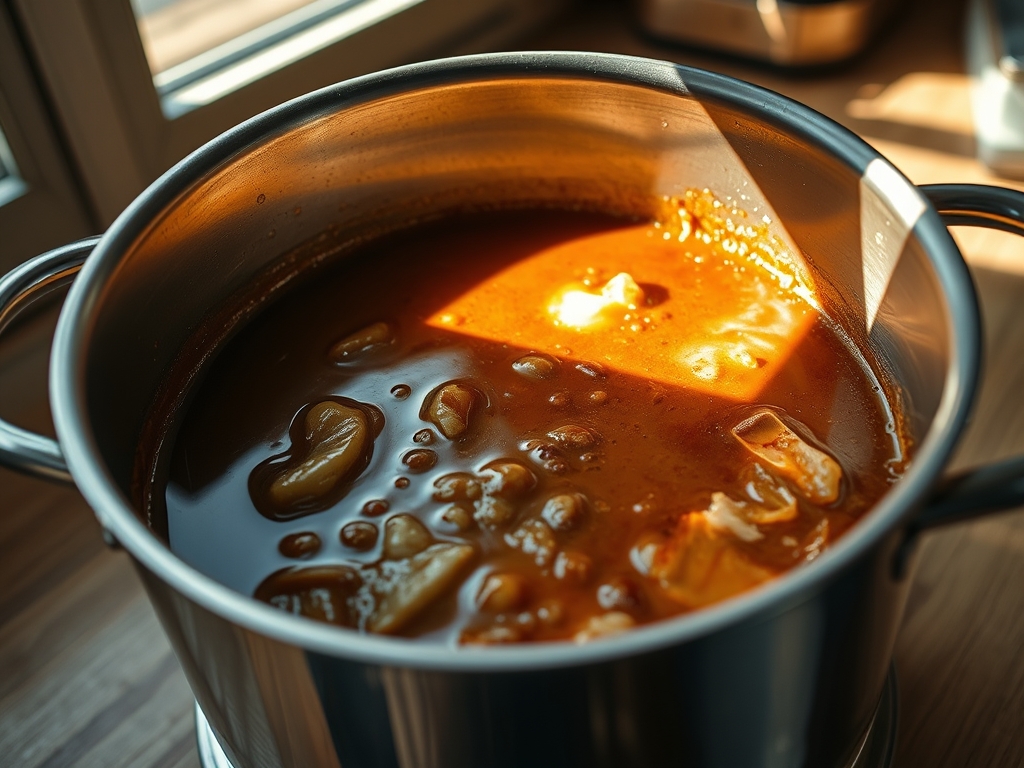
Pro Tip: This is where you Maintain Stew Viscosity. The flour creates a blond roux in situ, which provides the primary thickening power. A saucier or heavy-bottomed pot prevents the bottom from scorching during the long simmer.
4. The Low and Slow Equilibrium
Bring the mixture to a bare simmer; do not let it boil. Cover with a tight-fitting lid and place in a 300 degree Fahrenheit oven. Check every hour. If the liquid level drops too fast, add a splash of water or stock.
Pro Tip: The oven provides 360-degree radiant heat, which is more stable than a stovetop burner. Use a digital probe thermometer to ensure the internal temperature of the meat reaches 203 degrees Fahrenheit for optimal collagen-to-gelatin conversion.
5. The Final Reduction and Emulsification
Once the meat is fork-tender, remove the lid. If the sauce is too thin, simmer on the stovetop for 15 minutes. Taste for seasoning. Whisk in a cold knob of butter at the very end to create a glossy finish.
Pro Tip: This technique, known as monter au beurre, uses the milk solids in the butter to further emulsify the sauce, providing a luxurious mouthfeel that coats the back of a spoon.
Section B: Prep & Timing Fault-Lines:
The biggest human error is impatience. If you rush the sear, you lose flavor. If you boil the stew, the muscle fibers will contract and become "bullet-like" and dry. Timing is a function of temperature. If your oven calibration is off, use an internal oven thermometer to verify the environment. If you find the stew is too salty at the end, do not add water; add a splash of red wine vinegar or lemon juice. The acid cuts through the sodium perception without diluting the viscous texture you worked so hard to build.
THE VISUAL SPECTRUM
Section C: Thermal & Visual Troubleshooting:
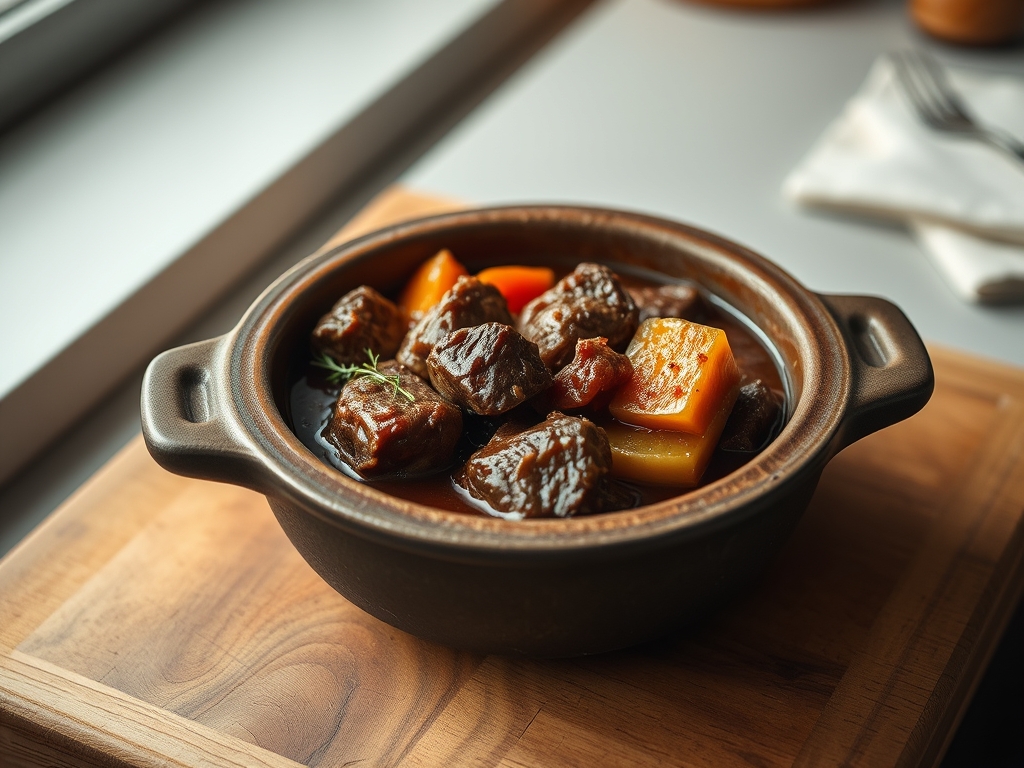
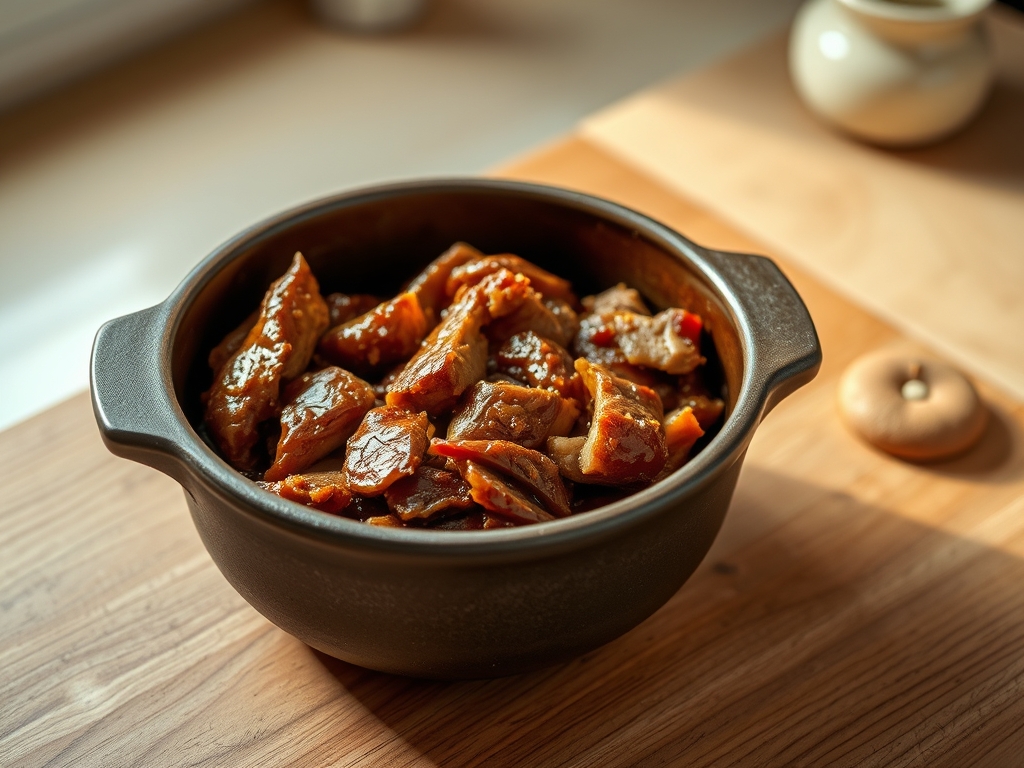
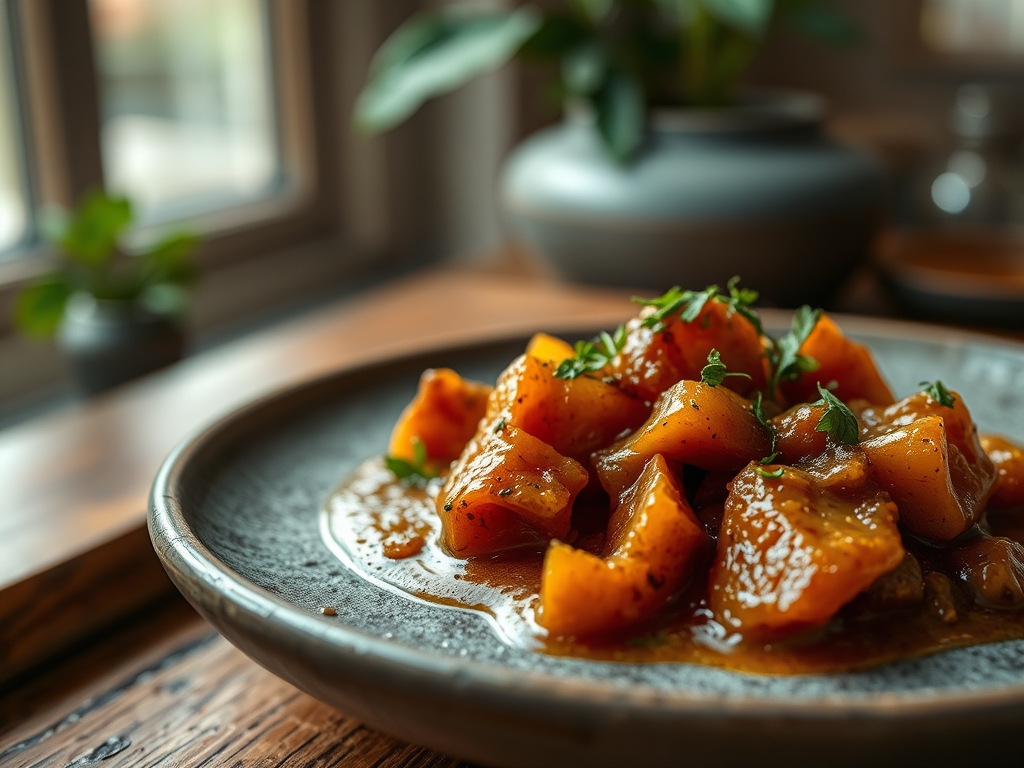
Look at the Masterclass photo above. Notice the deep mahogany hue and the way the sauce clings to the meat rather than pooling at the bottom of the bowl. If your stew looks grey, you skipped the Maillard sear or failed to cook the tomato paste long enough. If there are oil slicks on top, your emulsion has broken. Fix this by whisking in a small "slurry" of cornstarch and water, or simply use a fat separator. The vegetables should hold their shape but yield to a fork; if they are mushy, you cut them too small for a 4-hour cook.
THE DEEP DIVE
- Macro Nutrition Profile: High protein (approx 35g per serving) with moderate fats (20g) and low-to-moderate carbs (15g), depending on root vegetable density.
- Dietary Swaps: For Keto, omit the flour and carrots; use xanthan gum (sparingly) to Maintain Stew Viscosity. For Vegan builds, swap beef for king oyster mushrooms and use a mushroom-miso broth. For GF, substitute the flour with a high-quality 1-to-1 gluten-free blend or arrowroot powder.
- Meal Prep & Reheating Science: Stews actually improve overnight. As the mixture cools, the flavors continue to infuse and the gelatin sets into a semi-solid state. To reheat, do not microwave on high. Use a heavy pot on low heat and add a tablespoon of water to loosen the proteins without breaking the emulsion.
THE KITCHEN TABLE
How do I fix a stew that is too thin?
Simmer with the lid off to allow evaporation. Alternatively, mash a few of the cooked potatoes or carrots back into the liquid. This releases natural starches that help Maintain Stew Viscosity without changing the flavor profile significantly.
Can I overcook the meat?
Yes. While you want the collagen to melt, eventually the muscle fibers will shred into mush. Once the meat reaches 203-205 degrees Fahrenheit internally, it is done. Remove from heat immediately to preserve the structural integrity of the cubes.
Why is my sauce dull instead of shiny?
A dull sauce usually lacks fat or acidity. Whisking in a small piece of cold butter (monter au beurre) or a teaspoon of balsamic vinegar right before serving will provide that professional, light-reflecting sheen.
Does the type of pot really matter?
Absolutely. Thin-walled pots create hot spots that scorch the bottom. Heavy cast iron or tri-ply stainless steel distributes heat evenly, which is essential for the slow, steady reduction required for a truly viscous and rich sauce.