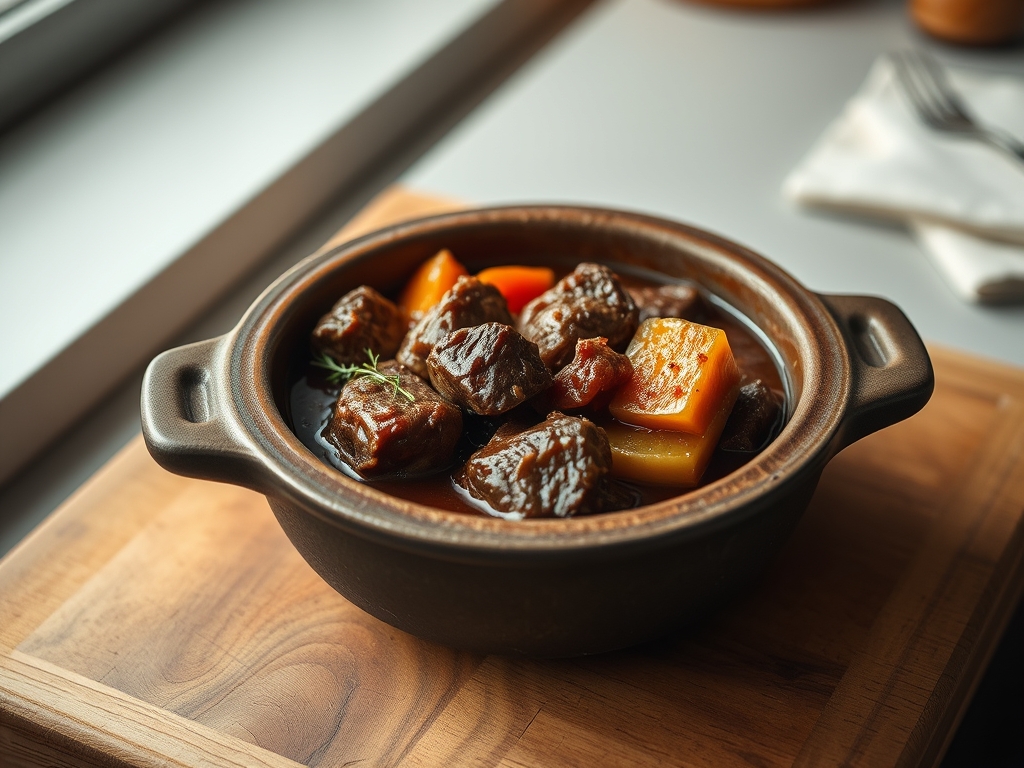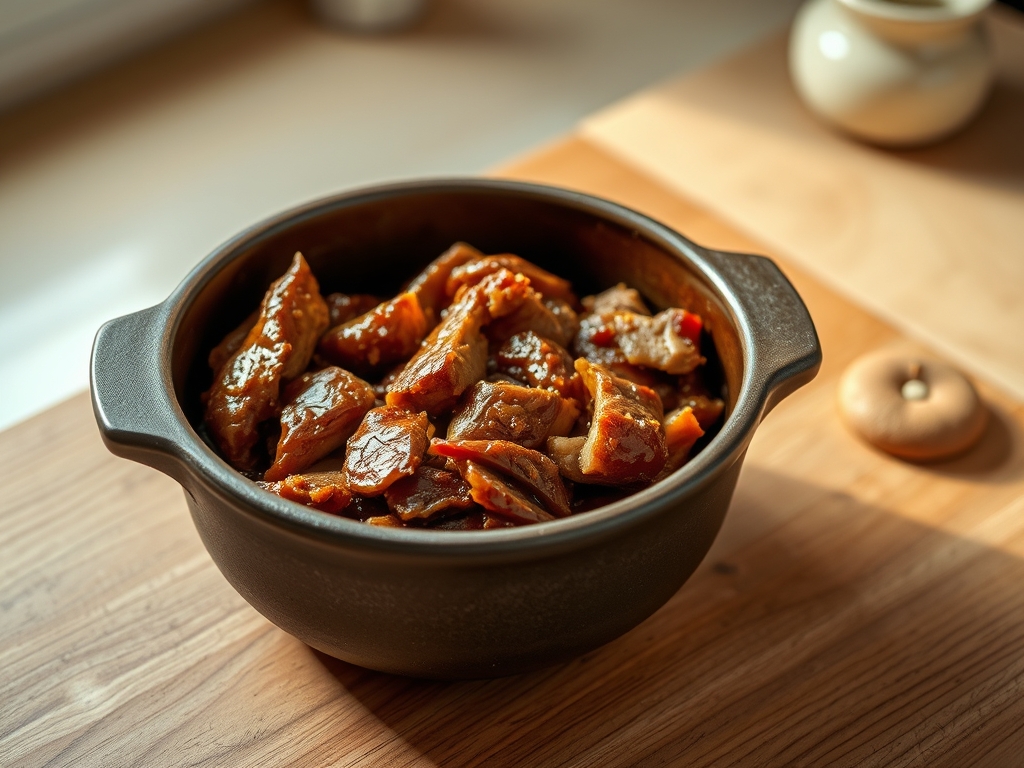
Listen to that sound. It is not just a sizzle; it is the rhythmic percussion of a high-energy chemical transformation taking place within the stainless steel confines of your appliance. When you execute Multi Cooker Sautéed Onions, you are not merely cooking a vegetable; you are conducting a thermal symphony. The goal is to move beyond the translucent, flaccid results of amateur attempts and push the boundaries of the Maillard reaction. We are looking for that specific, deep mahogany hue and a flavor profile that oscillates between savory depth and concentrated sweetness. This is a technical audit of your kitchen's infrastructure. If your onions are gray or steaming in their own juices, your thermal management is failing. We require a high-heat environment to initiate the breakdown of complex sugars into hundreds of aromatic compounds. Forget the slow-cooker passivity of the past. Today, we harness the concentrated heating elements of the modern multi cooker to achieve a texture that is simultaneously tender and structurally intact. Let us begin the audit.
THE DATA MATRIX
| Metric | Specification |
|---|---|
| Prep Time | 10 Minutes |
| Execution Time | 25 Minutes |
| Yield | 480ml / 2 Cups |
| Complexity (1-10) | 4 |
| Estimated Cost per Serving | $0.45 USD |
THE GATHERS
Ingredient Protocol:
- 900g / 2 lbs Yellow Onions (approximately 4 large bulbs)
- 45g / 3 tbsp Unsalted Butter or Ghee
- 15ml / 1 tbsp Extra Virgin Olive Oil
- 5g / 1 tsp Diamond Crystal Kosher Salt
- 2g / 0.5 tsp Granulated Sugar (optional catalyst)
- 60ml / 0.25 cup Beef Bone Broth or Water (for deglazing)
- 1g / 0.25 tsp Fresh Thyme Leaves
Section A: Ingredient Quality Audit:
The integrity of your raw materials dictates the ceiling of your success. If your onions feel soft or exhibit any "give" when squeezed, the cellular structure is already compromised; this leads to a mushy final product rather than a silky, viscous jam. If you find yourself with older onions that have sprouted, remove the green internal germ immediately, as it introduces a bitter, sulfurous note that heat cannot neutralize. For those dealing with excessively high water content in seasonal sweet onions, increase your initial fat ratio by 10 percent to ensure the onions fry rather than poach. If the butter begins to smoke too early, your multi cooker's "Sauté" function may be running too hot; switch to a fat with a higher smoke point, like avocado oil or clarified butter, to maintain thermal stability without acridity.
THE MASTERCLASS
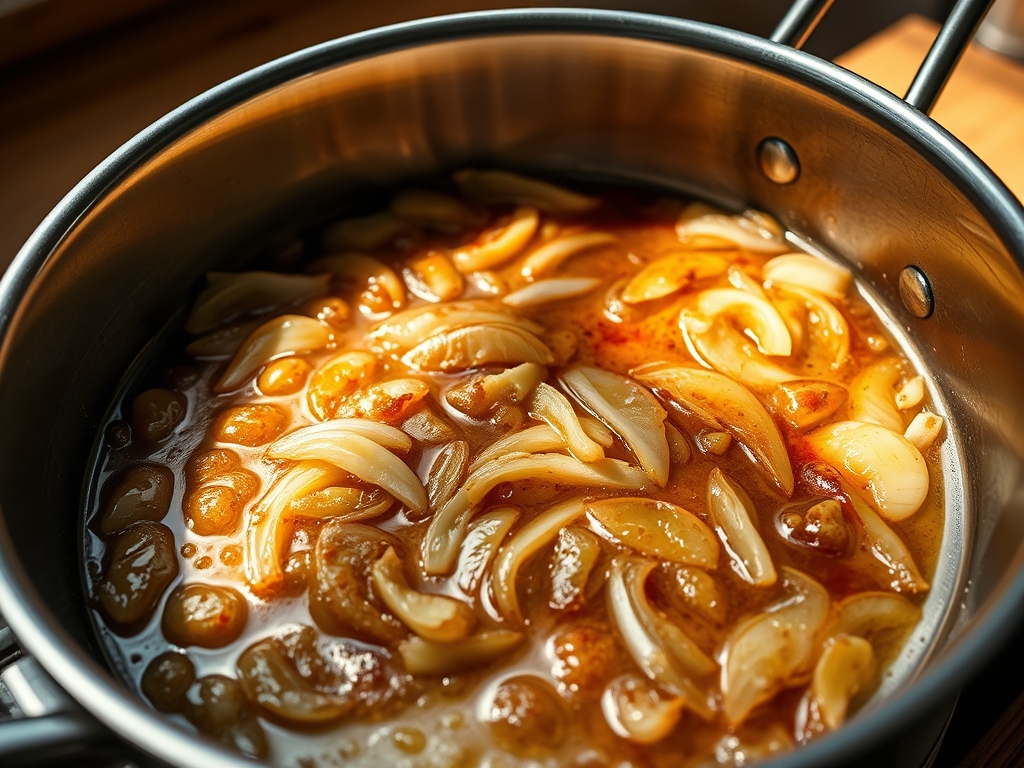
Step 1: Precision Allium Preparation
Utilize a sharp chef knife or a mandoline to slice the onions into consistent 6mm half-moons. Consistency is the primary directive here; uneven cuts lead to uneven browning. Use a digital scale to ensure you are working with the correct mass of produce, as overcrowding the pot is the fastest way to trigger an unwanted steaming effect.
Pro Tip: Use a bench scraper to transfer your sliced onions from the board to the pot. This prevents "bruising" the cell walls during transport and keeps your workspace sanitized and efficient.
Step 2: Thermal Induction and Lipid Integration
Set your multi cooker to the highest "Sauté" setting. Add the olive oil and butter simultaneously. The oil raises the overall smoke point, while the butter provides the milk solids necessary for complex flavor development. Once the butter stops foaming, add the onions and toss to coat every surface in a shimmering film of lipid.
Pro Tip: The foaming of the butter is a visual cue that water is evaporating. Adding the onions exactly at this moment ensures you are hitting the pot at peak thermal energy, which is essential to render the initial moisture out of the onions quickly.
Step 3: The Agitation Phase
Allow the onions to sit undisturbed for 3 to 4 minutes to establish a base layer of browning. Use a flat-edged wooden spatula or a saucier spoon to scrape the bottom of the pot, moving the browned bits from the bottom to the top. Repeat this every few minutes.
Pro Tip: Constant stirring is the enemy of the Maillard reaction. You need sustained contact with the heating element to create the "fond." A professional saucier spoon with a flat edge allows you to maintain total surface area contact, ensuring no sugars are left to scorch.
Step 4: Deglazing the Infrastructure
As the onions take on a deep tan color, a dark film will form on the bottom of the pot. This is gold. Pour in your 60ml of liquid and use your spatula to vigorously deglaze the surface. The liquid will lift the caramelized proteins and redistribute them, coating the onions in a rich, savory glaze.
Pro Tip: This is a thermodynamics play. The sudden introduction of liquid creates steam that softens the onion fibers from the inside out while the exterior continues to concentrate its sugars.
Step 5: Final Reduction and Infusion
Continue cooking until the liquid has evaporated and the onions have reached a deep, jammy consistency. Stir in your fresh thyme and a final pinch of salt to infuse the mixture with herbal aromatics. The onions should now be limp, glossy, and intensely fragrant.
Pro Tip: Use a digital scale to weigh your final yield. If you started with 900g and ended with approximately 300g, you have achieved the correct level of moisture reduction for a professional-grade result.
Section B: Prep & Timing Fault-Lines:
The most common human error in multi cooker operations is impatience. If you add the onions before the pot is fully preheated, they will dump their internal moisture into a lukewarm environment, resulting in a gray, boiled texture. Conversely, if you walk away for more than five minutes, the high-density heating element of the multi cooker can cause localized scorching. If you notice a "Burn" warning on your device, immediately add 30ml of water and stir aggressively to drop the surface temperature and salvage the batch.
THE VISUAL SPECTRUM
Section C: Thermal & Visual Troubleshooting:
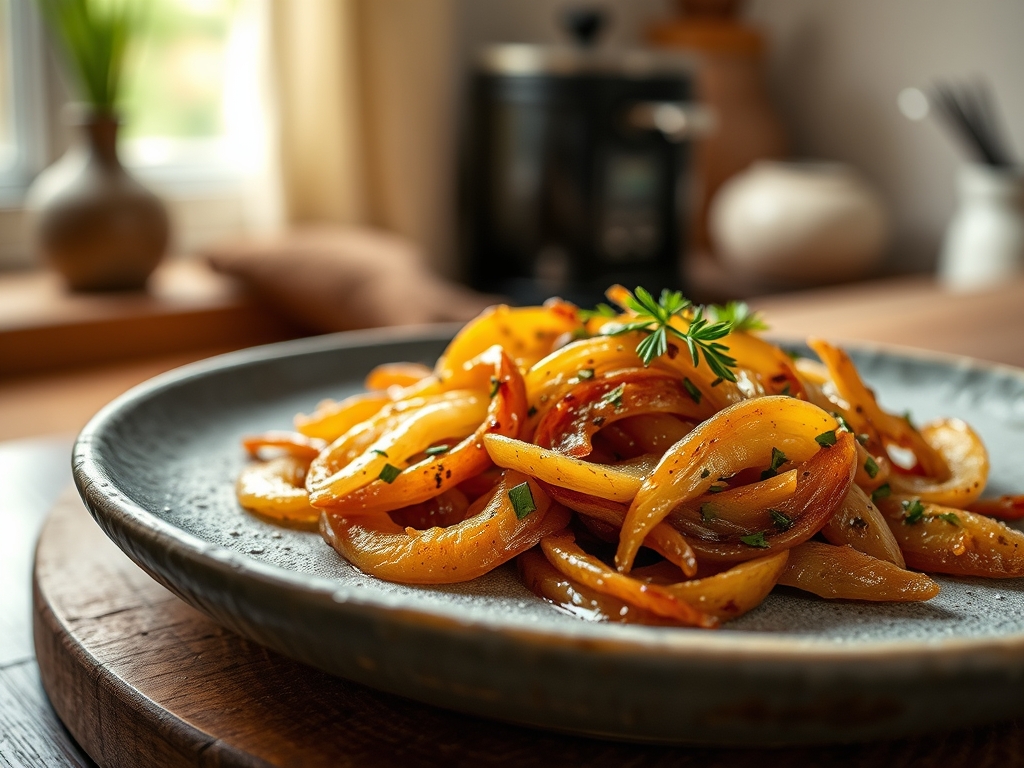
Referencing the Masterclass photo, your onions should exhibit a uniform, deep amber hue without black, carbonized edges. If your onions look "blond" or pale, you have not allowed the sugars to fully polymerize; continue the sauté for another five minutes. If the onions appear dry and matte rather than glossy, your fat-to-onion ratio was too low; stir in a teaspoon of oil to restore the viscous sheen. If you see uneven patches of white and dark brown, your agitation technique was inconsistent. Ensure you are moving the onions from the perimeter of the pot to the center, as multi cookers often have a "hot spot" directly above the heating ring.
THE DEEP DIVE
Macro Nutrition Profile:
Per 1/4 cup serving: 85 Calories, 6g Fat, 8g Carbohydrates, 2g Fiber, 1g Protein. Onions are rich in quercetin, a powerful antioxidant that remains relatively stable during the sauté process.
Dietary Swaps:
- Vegan: Replace butter with a high-quality vegan buttery spread or additional avocado oil.
- Keto: Ensure you do not add the optional sugar catalyst; the natural sugars in the onions are sufficient for caramelization.
- GF: Naturally gluten-free, provided your deglazing liquid (broth) is certified.
Meal Prep & Reheating Science:
These onions are a molecular powerhouse for meal prep. To maintain their structure, cool them rapidly on a flat sheet pan before refrigerating. When reheating, do not use a microwave, as it will aerate the residual moisture and make them soggy. Instead, use a small skillet over medium heat to re-activate the fats and crisp the edges.
THE KITCHEN TABLE
Why are my onions steaming instead of browning?
You likely overcrowded the pot or didn't allow it to preheat. The moisture release overwhelmed the heating element's ability to evaporate water. Cook in smaller batches or increase the heat setting to ensure rapid evaporation.
Can I use red onions for this process?
Yes, but the visual result will be much darker, almost purple-black. Red onions also have a slightly higher sugar content, meaning they will caramelize faster and require more frequent agitation to prevent scorching.
Is it necessary to add sugar?
Not strictly, but a tiny amount acts as a chemical catalyst to jumpstart the Maillard reaction. It is particularly helpful if you are using older onions that have lost some of their natural sweetness through storage.
How long can I store these in the freezer?
Properly sealed in an airtight container, these onions will maintain their molecular integrity for up to three months. Thaw them in the refrigerator overnight before reheating in a pan to restore their original texture.