Stop treating your kitchen like a hobbyist playground and start treating it like a high-output laboratory. We are here to dismantle the inefficient, stovetop-watching drudgery of traditional grain preparation. Enter the era of Rice Cooker Couscous. This is not just a side dish; it is a marvel of rapid vapor swelling and pressurized hydration. Imagine the scent of toasted semolina colliding with the sharp, piquant aroma of blooming aromatics. The texture is the primary objective here. We are aiming for individual pearls that possess a distinct snap before yielding to a soft, aerated center. By utilizing the sealed thermal environment of a rice cooker, we eliminate the variables of evaporation and uneven heat distribution that plague the open-pot method. This is culinary infrastructure at its most streamlined. We are maximizing surface area contact with steam to ensure every single grain reaches its peak structural integrity without turning into a viscous, starchy sludge. Prepare for a total system upgrade.
THE DATA MATRIX
| Metric | Specification |
|---|---|
| Prep Time | 5 Minutes |
| Execution Time | 10 Minutes (Active) / 15 Minutes (Total) |
| Yield | 4 Standard Servings |
| Complexity (1-10) | 2 (Low Barrier, High Precision) |
| Estimated Cost per Serving | $0.45 USD |
THE GATHERS
Ingredient Protocol:
- 250ml / 1 cup Instant Couscous (Durum Wheat Semolina)
- 300ml / 1.25 cups Low-Sodium Vegetable or Chicken Stock
- 15ml / 1 tbsp Extra Virgin Olive Oil
- 5g / 1 tsp Sea Salt (Fine Grain)
- 2g / 0.5 tsp Smoked Paprika (to infuse color and depth)
- 10g / 2 tbsp Fresh Parsley (finely minced)
- 15g / 1 tbsp Unsalted Butter (to render for finishing)
Section A: Ingredient Quality Audit:
If your couscous smells like old cardboard, your lipid oxidation has failed; discard it. The semolina must be dry and free-flowing. If using tap water instead of stock, you are sacrificing a massive flavor-loading opportunity. Fix this by adding a concentrated bouillon base or a splash of white wine to deglaze the potential blandness. If your olive oil is bitter, it has likely oxidized. Always source cold-pressed oils to ensure the volatile flavor compounds remain intact during the rapid heating cycle.
THE MASTERCLASS
1. The Vessel Calibration
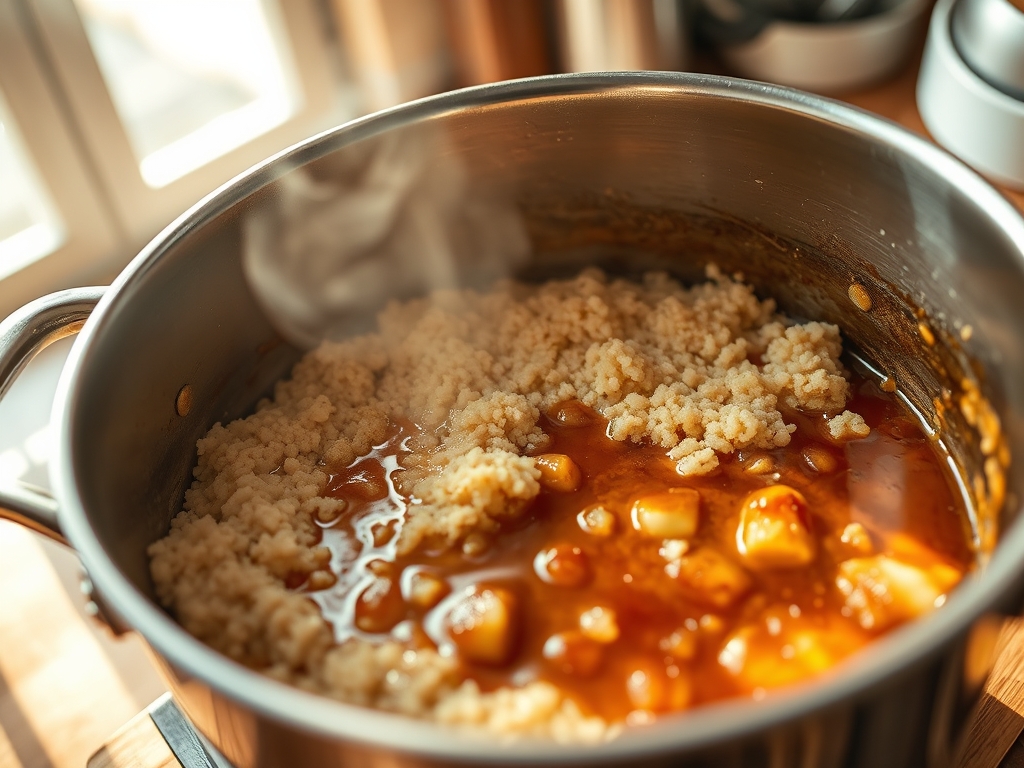
Place your rice cooker insert on a digital scale and tare it to zero. Add the dry couscous and the salt. Precision is the enemy of mediocrity. By weighing your dry goods, you ensure the liquid-to-grain ratio remains constant regardless of how tightly packed your measuring cup might be.
Pro Tip: Use a bench scraper to level off your dry measurements if you insist on using volumetric cups. The science here is simple: consistent density leads to consistent hydration.
2. The Liquid Infusion
Pour the stock and olive oil into the cooker. Use a small whisk or a saucier spoon to stir the mixture once. You want to ensure the grains are fully submerged but not agitated to the point of releasing excess surface starch. Excess agitation creates a gummy mouthfeel; we want discrete pearls.
Pro Tip: Pre-heating your stock to 60C (140F) before adding it to the cooker can shave three minutes off the cycle and prevent the bottom layer of grains from over-hydrating while the machine climbs to boiling temperature.
3. The Thermal Cycle
Close the lid and engage the "White Rice" or "Quick Cook" setting. The rice cooker functions as a closed-loop thermodynamic system. As the liquid reaches its boiling point, the steam is trapped, forcing moisture into the center of each semolina pearl.
Pro Tip: Do not open the lid. Every time you "peek," you release the pressurized vapor and drop the internal temperature by at least 15 degrees. Trust the sensors in your hardware.
4. The Aeration Phase
Once the timer signals completion, immediately open the lid. Use a fork or a specialized rice paddle to aerate the grains. This prevents the residual heat from clumping the pearls together. Drop in the cold butter and allow it to render over the hot grains, coating each one in a thin, silken film.
Pro Tip: A microplane can be used at this stage to zest fresh lemon directly over the grains. The citrus oils are highly volatile and will be carried upward by the remaining steam, deeply scenting the entire batch.
Section B: Prep & Timing Fault-Lines:
The most common failure is the "Set and Forget" trap. If you leave the couscous on the "Keep Warm" setting for more than ten minutes, the bottom layer will dehydrate and brown into a hard crust. This is a failure of timing. If your grains are crunchy, you lacked sufficient liquid volume; add 20ml of boiling water and seal the lid for an additional three minutes of "carry-over" steaming.
THE VISUAL SPECTRUM
Section C: Thermal & Visual Troubleshooting:
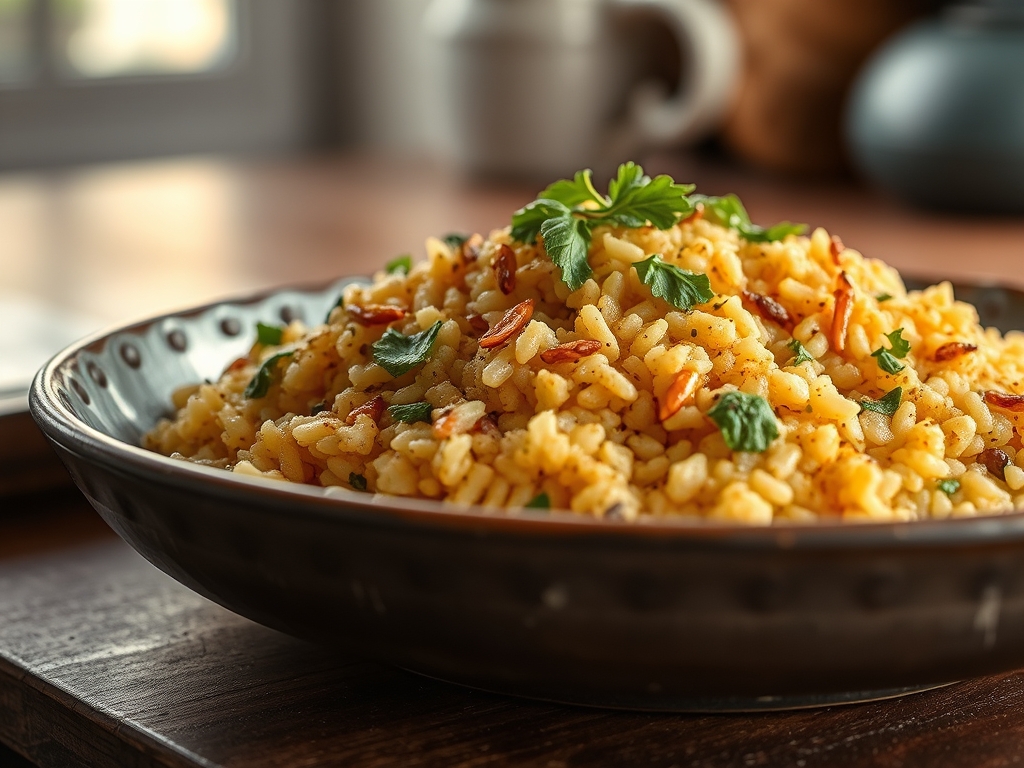
Looking at the Masterclass photo, notice the distinct separation of grains and the vibrant, golden hue. If your Rice Cooker Couscous looks grey or dull, you skipped the paprika or used low-quality stock. If the texture looks "mushy" in the photo's highlights, you likely over-saturated the grains. The visual cue for perfection is a slight "sheen" on each pearl, indicating that the fats have properly emulsified with the surface moisture. If you see uneven browning on the bottom, your rice cooker's heating element is likely calibrated too high for small batches; increase your batch size next time to better distribute the thermal load.
THE DEEP DIVE
Macro Nutrition Profile:
A standard serving of this infrastructure-grade couscous provides approximately 200 calories, 36g of carbohydrates, 6g of protein, and 5g of healthy fats. It is a high-energy fuel source designed for rapid glucose replenishment.
Dietary Swaps:
- Vegan: Replace butter with a high-quality avocado oil or vegan ghee.
- Keto: This is a wheat-based grain; there is no direct swap. Use riced cauliflower, but reduce liquid by 80%.
- GF: Substitute with certified gluten-free fonio or quinoa, though the hydration timing will increase by 10 minutes.
Meal Prep & Reheating Science:
To maintain the molecular structure during reheating, do not use a microwave on high power. This vibrates water molecules too violently, rupturing the grain walls and creating a soggy mess. Instead, add a teaspoon of water and reheat in a sealed container on low power to re-introduce gentle steam.
THE KITCHEN TABLE
Can I add vegetables directly into the cooker?
Yes, but only high-density aromatics like minced carrots or onions. Leafy greens will turn into a sulfurous paste. Finely dice your vegetables to ensure they soften within the short ten-minute thermal window.
Why is my couscous clumping despite adding oil?
You likely failed to aerate the grains immediately after the cycle ended. The starch remains "active" and sticky while hot; you must break the surface tension with a fork to allow steam to escape.
Can I use pearl (Israeli) couscous instead?
Israeli couscous is larger and requires a higher liquid-to-grain ratio (1.5:1) and a longer cooking cycle. The standard "Quick Cook" setting may leave the centers of larger pearls unpleasantly chalky.
Is it possible to overcook this in a rice cooker?
The machine's internal thermostat prevents burning by switching to "Warm" once liquid is absorbed. However, the residual heat will continue to "cook" the grains, leading to a loss of structural snap if left too long.